
Down the Hole Hammers
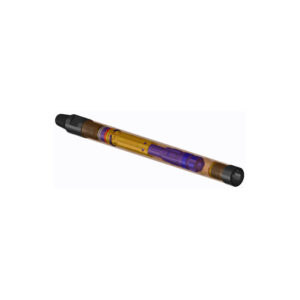
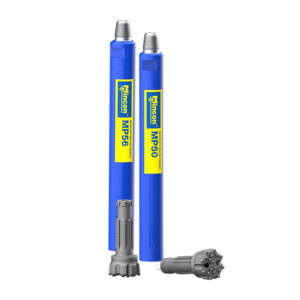
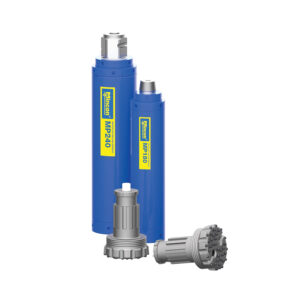
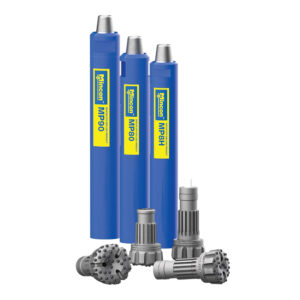
Down-the-hole (DTH) hammers ride at the bottom of the drill string, right behind the bit, so impact energy stays strong at any depth — the reason DTH drilling stays fast and straight in hard rock where top-hammer drills fade. We stock the Mincon MP-Series DTH hammers and sell Rock Hog and Rockmore lines to order, covering every hole from 3 to 24 in. Bits are universal — chosen by shank designation (DHD, QL, SD) and head diameter, not by brand — so match the shank family to your hammer and the head to your hole. New to DTH? Our DTH hammer buyer’s guide walks hole size, air, pressure, foot valve, and shank in order. For shallower holes, see handheld rock drills.
Showing all 21 resultsSorted by popularity
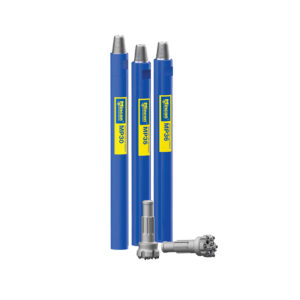 QUOTE Select options This product has multiple variants. The options may be chosen on the product page
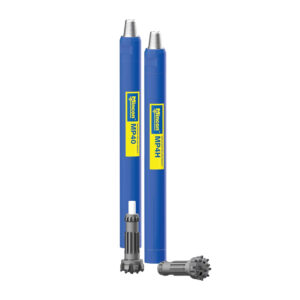 QUOTE Select options This product has multiple variants. The options may be chosen on the product page
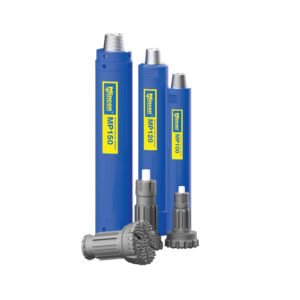 $17,107.00 Select options This product has multiple variants. The options may be chosen on the product page
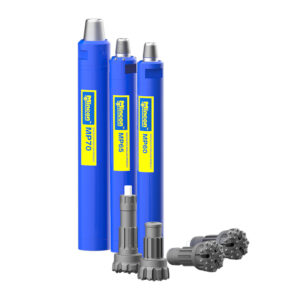 QUOTE Select options This product has multiple variants. The options may be chosen on the product page
 QUOTE Select options This product has multiple variants. The options may be chosen on the product page
 QUOTE Select options This product has multiple variants. The options may be chosen on the product page
- QUOTE Select options This product has multiple variants. The options may be chosen on the product page
- QUOTE Select options This product has multiple variants. The options may be chosen on the product page
 QUOTE Select options This product has multiple variants. The options may be chosen on the product page
- QUOTE Select options This product has multiple variants. The options may be chosen on the product page
- QUOTE Select options This product has multiple variants. The options may be chosen on the product page
- QUOTE Select options This product has multiple variants. The options may be chosen on the product page
- QUOTE Select options This product has multiple variants. The options may be chosen on the product page
- QUOTE Select options This product has multiple variants. The options may be chosen on the product page
- QUOTE Select options This product has multiple variants. The options may be chosen on the product page
- QUOTE Select options This product has multiple variants. The options may be chosen on the product page
 QUOTE Select options This product has multiple variants. The options may be chosen on the product page
- QUOTE Select options This product has multiple variants. The options may be chosen on the product page
- QUOTE Select options This product has multiple variants. The options may be chosen on the product page
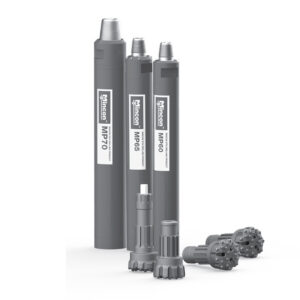 QUOTE Select options This product has multiple variants. The options may be chosen on the product page
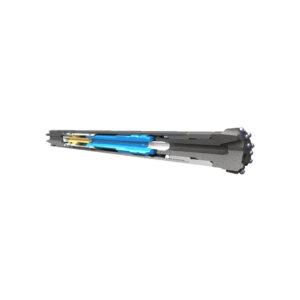 QUOTE Select options This product has multiple variants. The options may be chosen on the product page
Showing all 21 resultsSorted by popularity
Size the Hammer to the Hole and the Air
Two numbers pick a DTH hammer: the hole diameter sets the size class, and your compressor’s delivered air must feed it in both CFM and pressure. A hammer starved for air drills slowly and wears fast. Match the class below, then confirm your air compressor delivers the CFM at the hammer’s working pressure. The DTH hammer buyer’s guide works through all five buying decisions in order.
DTH Hammer Size Classes
Bits run a little larger than the hammer body, and air demand climbs with operating pressure and altitude. These are typical class ranges.
| Class | Hole size | Shank | Air (CFM, typ.) | Best for |
|---|---|---|---|---|
| 3 in. | 3–3.5 in. | DHD3.5 | 130–190 | Anchors, seismic, utility holes |
| 4 in. | 4–5 in. | DHD340 | 150–300 | Construction, quarry, presplit — the general-purpose class |
| 5 in. | 5–6 in. | QL50 | 300–650 | Water well, geothermal, foundation |
| 6 in. | 6–7 in. | QL60 | 450–800 | Quarry production, deep wells, loop fields |
| 8 in. | 8–10 in. | QL80 / DHD380 | 900–1,300 | Deep blastholes, large wells, mining |
| 10 in.+ | 10–24 in. | SD10 and up | 1,500–5,000+ | Large-diameter blastholes and caissons (MP100–MP240) |
See the full line — Mincon, Rockmore, and Rock Hog, foot-valve and no-foot-valve — with verified specs in the DTH hammer buyer’s guide.
Foot Valve, Pressure, and Bits
A few choices tune the hammer to your ground. Foot valve or not: foot-valve models (DH, QL, SD suffixes) flush and draw back better in wet holes; no-foot-valve models (MQ, MC) use a simpler air path that saves air in dry, hard rock — many Mincon models come both ways, like the MP60-QL and the MQ68. Pressure: high-pressure hammers (350–500 psi) drill faster if your air can feed them; low-pressure models suit smaller compressors. Bits: match the DTH bit by shank family and head diameter — a QL60 bit fits any QL60 hammer, any brand.
Common Questions
What size DTH hammer do I need? Size it to the hole: a 3 in. hammer drills ~3–3.5 in. holes, a 4 in. drills 4–5 in., a 5 in. drills 5–6 in., a 6 in. drills 6–7 in., and an 8 in. drills 8–10 in. For 10–24 in. holes, move to large-diameter hammers (Mincon MP100 through MP240). The bit runs a little larger than the body — stay inside each model’s published bit window.
How much air does a DTH hammer need? Roughly 130–190 CFM for a 3 in., 150–300 for a 4 in., 300–650 for a 5 in., 450–800 for a 6 in., and 900–1,300 CFM for an 8 in.; large-diameter hammers need 1,500 CFM and up, often with a booster. Match the compressor in both CFM and psi — air is the biggest driver of penetration rate.
Are DTH bits interchangeable between brands? Yes, by shank. Bits are specified by shank designation (DHD3.5, DHD340, QL50, QL60, QL80) and head diameter — both industry standards shared across makers. A QL60 bit fits any QL60 hammer, Mincon or otherwise. Confirm the shank family, since QL and DHD are different profiles. Shop DTH bits.
DTH or a rock drill? Choose DTH for deep, large, or dead-straight holes — impact stays strong at depth. For shallower, smaller holes, a handheld rock drill is more efficient and lower-cost. See the buyer’s guide.