
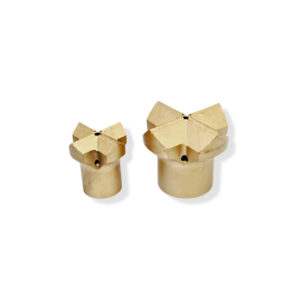
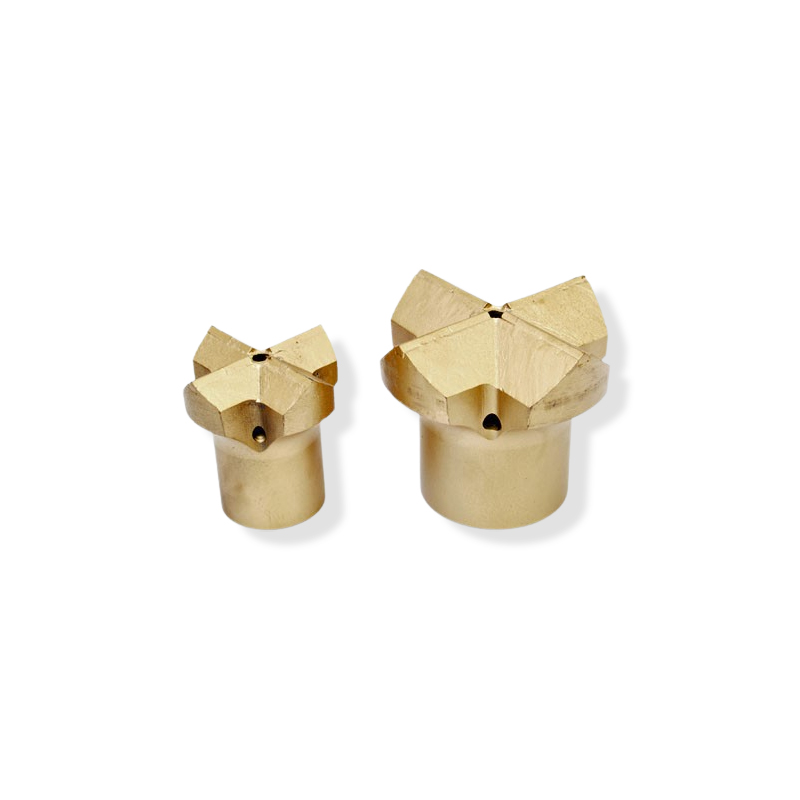
A Soil Stabilization Carbide Tipped Cross Bit is a specialized drill bit designed to aid in soil stabilization, drilling through various soil and rock formations, and facilitating the application of stabilization agents like cement, lime, or chemicals in geotechnical engineering, construction, and mining projects. The unique “cross” design, combined with carbide tips, offers superior performance in tough and mixed-ground conditions.
- Design:The cross-shaped design refers to the arrangement of cutting edges on the bit, which form a cross pattern. This allows the bit to have multiple cutting points that help break up the soil more effectively.The cross design offers a multi-directional cutting action, making it suitable for both soil and rock formations.The carbide tips are strategically placed at the ends of the cross, where they can exert pressure to break through tough materials. The shank of the bit is designed to fit into the drilling rig and is typically equipped with threaded ends for secure attachment to drill rods or extensions. The threading ensures a tight and stable connection.Many carbide-tipped cross bits include internal cooling channels that allow for the flow of water or air to help keep the carbide tips from overheating during prolonged use.This cooling feature helps extend the lifespan of the bit by maintaining the temperature of the carbide tips at an optimal level.
- Applications:
- Soil Stabilization:Soil stabilization projects are a primary application for carbide-tipped cross bits. The cross design is particularly effective for drilling through a combination of soil and rock, allowing the bit to make efficient holes for the injection of stabilization agents such as cement, lime, or chemical compounds.These bits break up the ground into small, manageable sections, enabling stabilization agents to penetrate deeper into the soil and enhance the grounds engineering properties.
- Geotechnical Drilling:The carbide-tipped cross bit is commonly used in geotechnical investigations, where it’s important to drill through tough or mixed soil and rock layers to obtain soil samples for analysis.It is ideal for drilling boreholes for soil and rock testing, helping geotechnical engineers assess the soil’s ability to support structures or foundations.The bit’s ability to efficiently drill through varying formations allows for accurate sample retrieval and testing.
- Foundation Drilling:In foundation drilling, carbide-tipped cross bits are used to prepare the ground for the installation of foundations. This may include drilling holes for piles, anchors, or other foundation elements that require deep penetration into the earth.The cross design makes it suitable for deep drilling in tough conditions, providing stability to the foundation work by allowing for precise and efficient drilling.
- Road and Pavement Construction:Road construction and pavement stabilization are other key areas where cross bits are used. These bits help in preparing the subsoil by drilling and stabilizing the ground before laying roads, foundations, or pavements.By stabilizing the soil with agents, the bit ensures a stable base for asphalt or concrete to be laid over, which is crucial in areas with weak or loose soils.
- Mining and Quarrying:In mining and quarrying, cross bits are used for exploration drilling, blast hole drilling, and even core sampling. The carbide tips are essential for penetrating hard rock and mixed materials found in mining operations.The bits ability to break up tough layers makes it suitable for drilling holes to place explosives or obtain geological samples for analysis.
- Water Well Drilling:Cross bits are used in water well drilling applications to access underground aquifers. The carbide tips enable the bit to drill through tough soil and rock layers to create deep, stable holes for water extraction.The cross design is particularly effective when drilling in areas with varied ground conditions, ensuring better penetration and hole stability.
- Tunneling:In tunneling operations, cross bits help in drilling through mixed and often difficult soil and rock conditions. They allow for efficient penetration, creating holes for rock bolts, anchors, and other stabilization efforts in tunnel construction.The ability of the bit to handle tough ground conditions makes it a critical tool for creating stable tunnel structures.
- Materials:The bit body is typically made of high-strength steel or alloy steel to withstand heavy wear and stress during drilling operations.Carbide tips (often made of tungsten carbide) are welded onto the bit’s working surface to provide high durability and resistance to wear, particularly in abrasive or mixed soils and rocks.
- Configuration: R32 to R51, T76, and Titan 40 to Titan 52 threads with 2″ to 7″ bit diameter.

