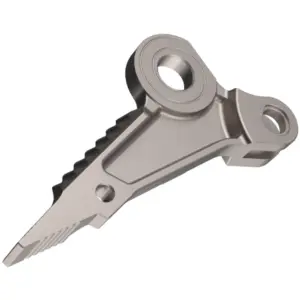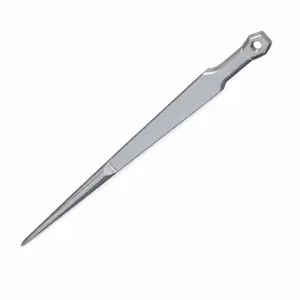
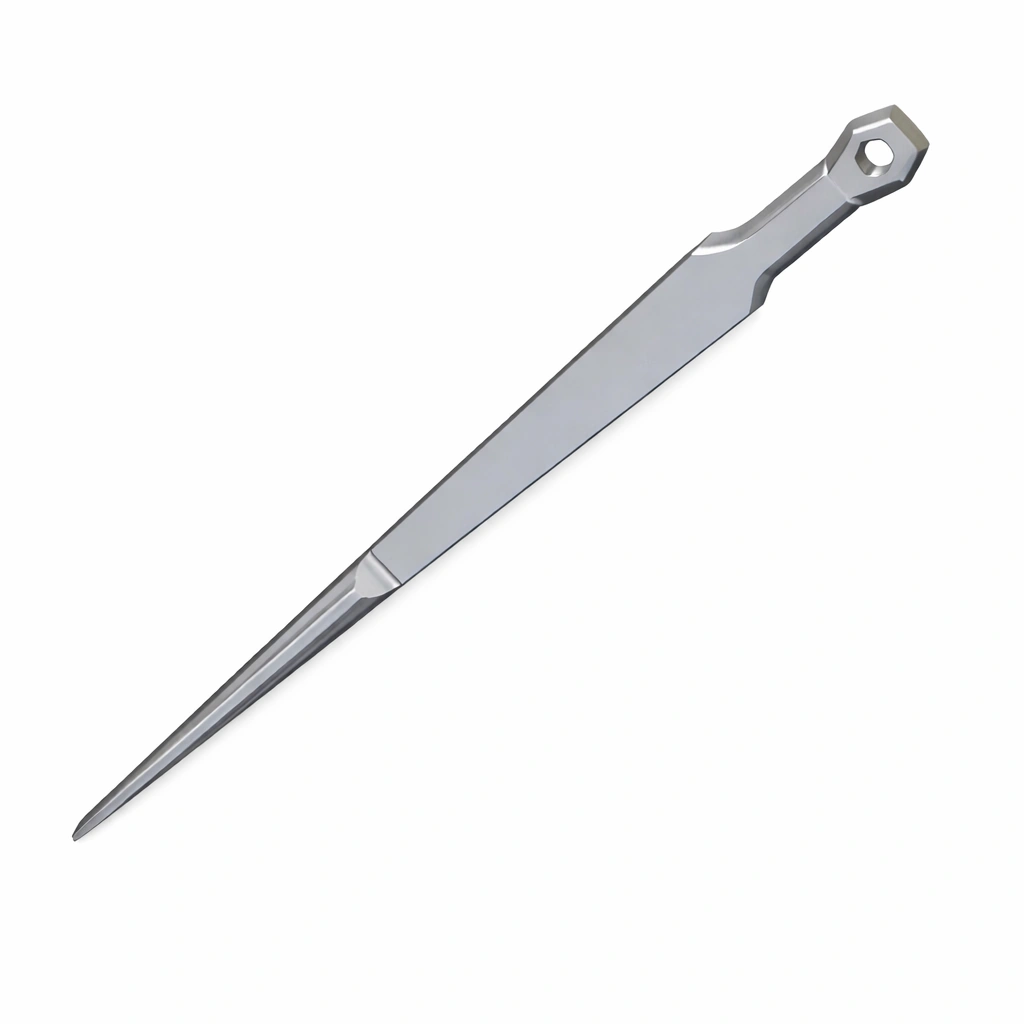
A Darda central wedge is the core component of hydraulic or pneumatic splitting systems used to break rock and concrete without explosives. It operates by converting hydraulic pressure into a mechanical splitting force. The wedge is inserted into a pre-drilled hole in the rock or concrete, and as it is hydraulically driven, it pushes the material apart along natural fissures or cracks.
Design:
- Shape: Tapered wedge with a central ridge or pointed tip to initiate splitting.
- Mechanism: Works with Darda splitter cylinders; the wedge transmits the force from the cylinder outward, creating tensile stress in the material.
- Variants: Available in single, double, or multi-wedge designs depending on splitting force requirements.
Applications:The central wedge is used in multiple industries:
- Mining and Quarrying – Breaking large rocks into smaller, manageable blocks; Reducing vibration and noise compared to blasting; Suitable for precision splitting in hard rock.
- Civil Engineering -Demolition of concrete structures: walls, bridges, and foundations; Controlled splitting avoids damage to surrounding structures.
- Tunneling and Excavation -Splitting rock in confined spaces; Useful in urban tunneling where explosives are unsafe.
- Underwater or Sensitive Environments -Can be used where vibration and debris from blasting must be minimized.
Materials:The wedge must combine hardness, toughness, and wear resistance:
- Tool Steels – Commonly Cr-Mo alloy steels or high-speed steels (HSS); Heat-treated for high hardness (~5060 HRC) and tensile strength; Good impact toughness to avoid chipping.
- Surface Treatments -Nitride or carbide coatings for increased wear resistance;Chrome plating for corrosion resistance in wet or marine environments.
- Alternative Materials -Tungsten carbide tips in extreme wear applications;High-strength stainless steel for corrosive or underwater use
Configuration:
- Splitter Model: C2, C4, C9, C10S or C12
- Long, Narrow, Narrow, Jura, Wide, Wide and Long, Wide and Extra Long