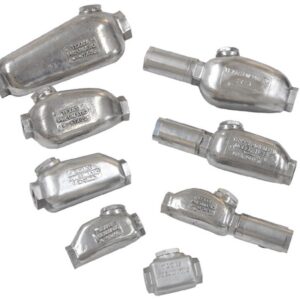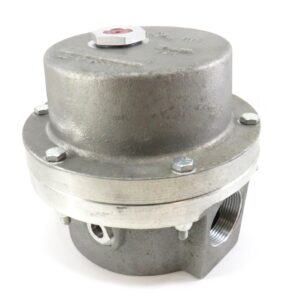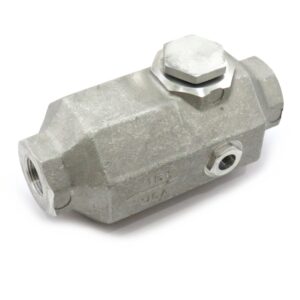
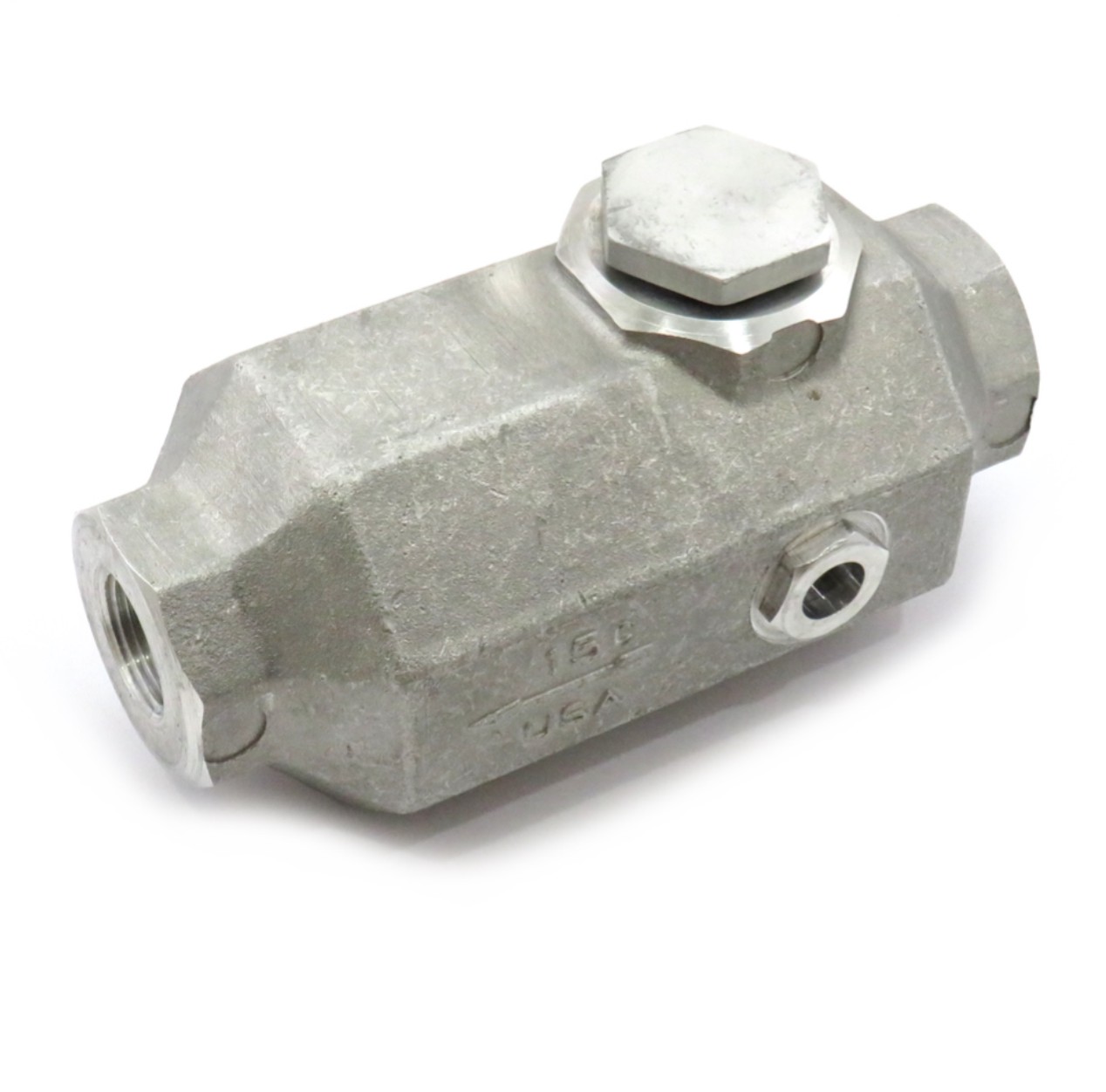
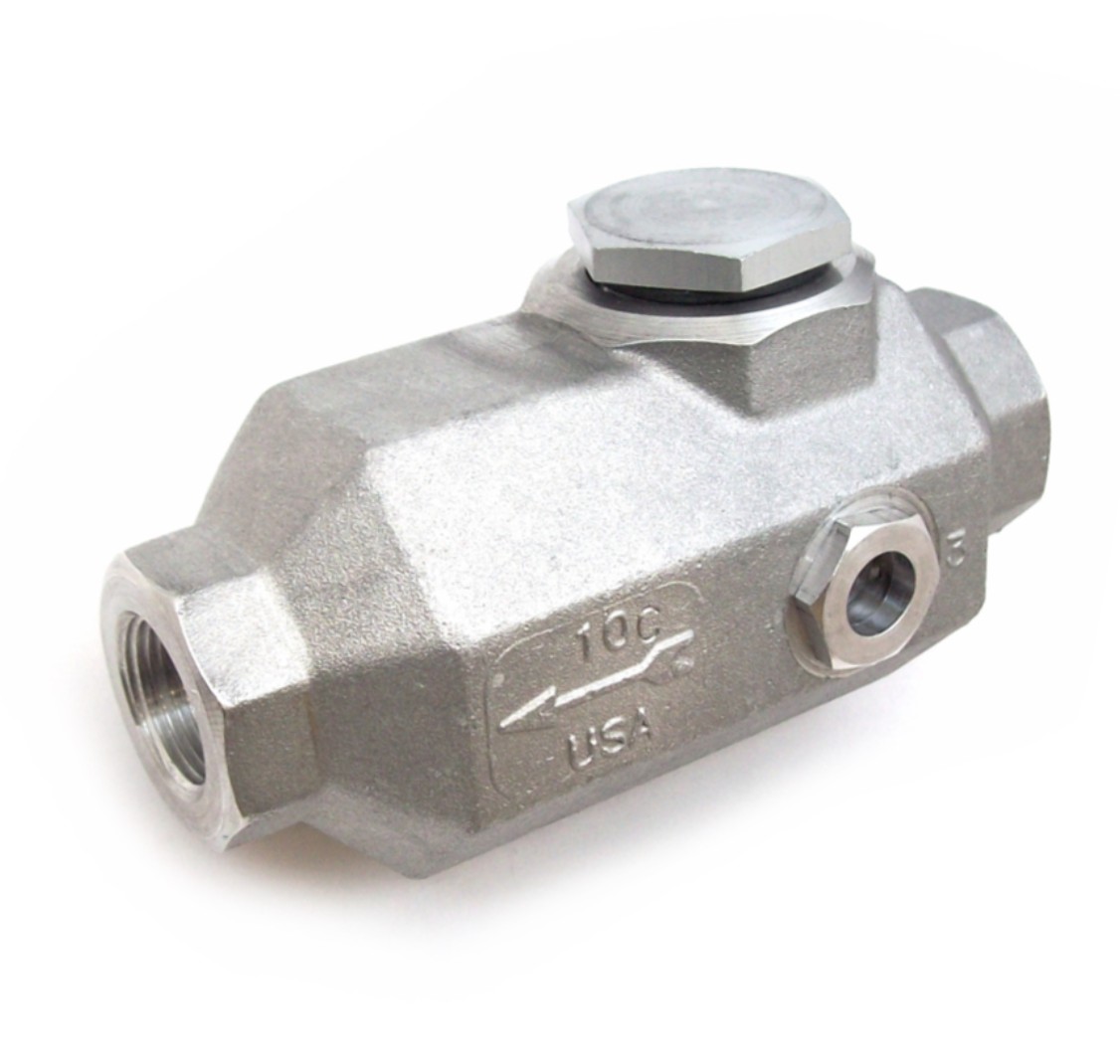
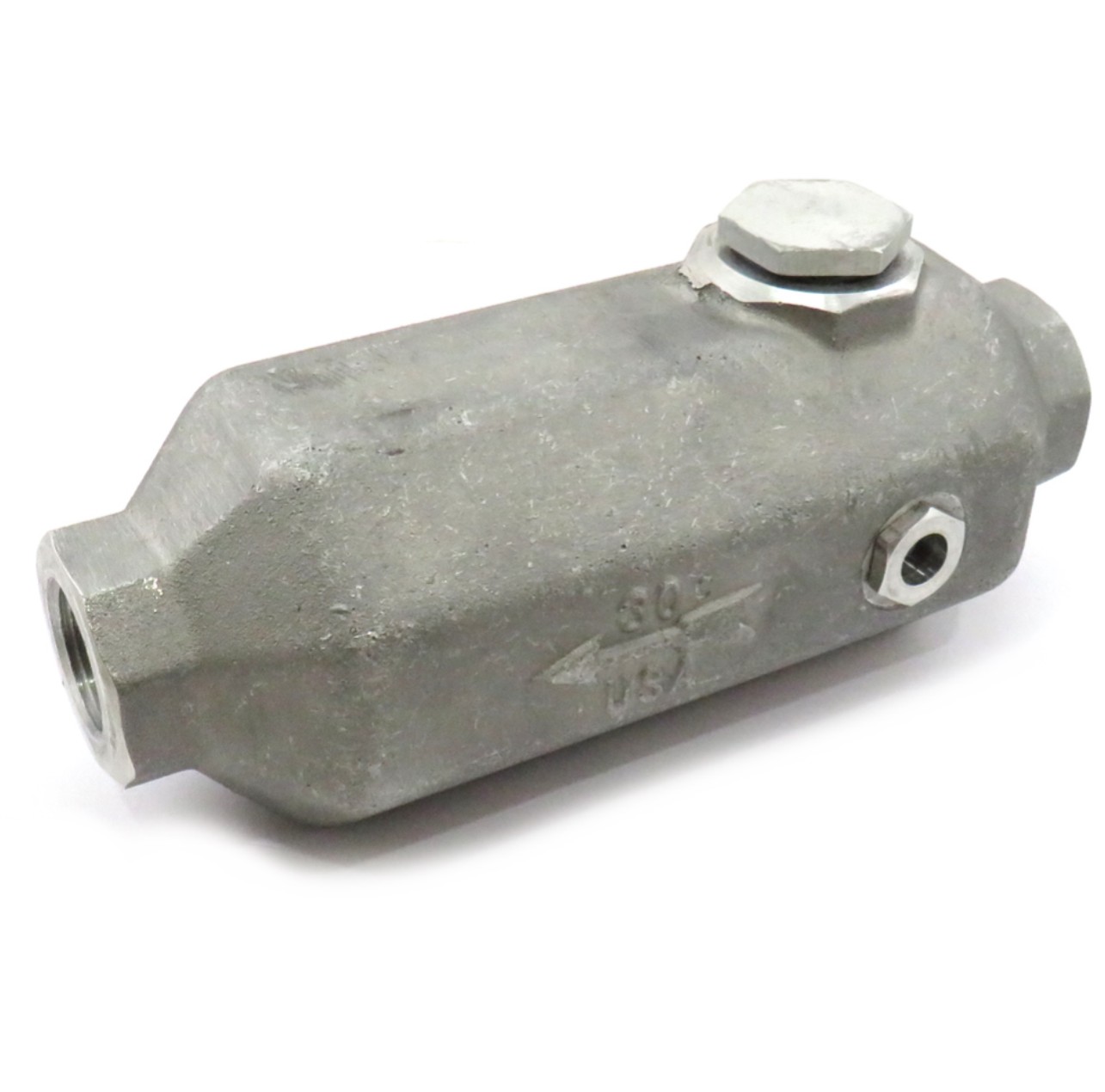
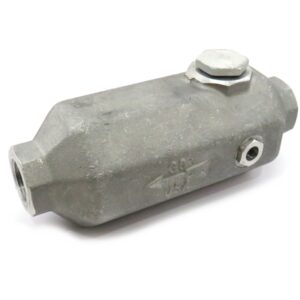
A pressure-feed line oiler is a lubrication device that injects a controlled amount of oil into a pressurized fluid line (air or other gas or even liquid) to ensure adequate lubrication of downstream components (bearings, pneumatic tools, valves, manifolds). The aluminum qualifier refers to the body or housing being made of aluminum (or aluminum alloy) which offers lightweight corrosion resistance and good mechanical strength.
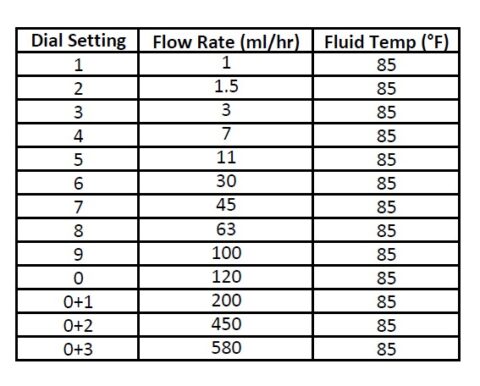
In operation: the device is installed in-line; the pressurized medium flows through or past the oiler; the oiler meters oil from its reservoir into the flow, typically via a metering valve or adjustable feed screw. The term pressure-feed indicates the oil is fed by virtue of the pressure differential in the supply line rather than purely gravity drip. For example, pneumatic in-line lubricators for air tools use this principle.
Design:
- Body/housing constructed of cast or machined aluminum or aluminum alloy for strength and light weight. Example: the body of the model Dixon PL400L is aluminum.
- Oil reservoir or chamber attached to the body (sometimes transparent for level monitoring).
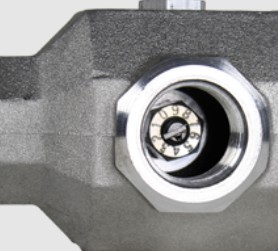
- Metering valve or adjustment screw to regulate oil flow into the line.
- Threaded inlet/outlet ports (e.g., NPT) to install in the supply line.
- Sight glass or transparent section to monitor oil level or flow.
- Pressure rating appropriate for the medium (e.g., 250 300 psi in pneumatic systems). Example: the TX-2L in-line lubricator: body made of cast aluminum, reservoir 11 oz, max working pressure 300 psi.
- Some models specify maximum airflow or medium flow (e.g., maximum air flow 70 CFM at 90 psi for TX-2L).
- The pressure-feed aspect may mean the oil is introduced under line pressure or via small differential to the main flow.
Materials:
- Aluminum (body/housing): Often cast or machined aluminum alloy (for example the body of TX-3L-CF is cast aluminum).
- Seals and internals: Typically elastomers (nitrile, FKM, etc), brass or steel metering components, possibly transparent plastics or glass for sight windows.
- Reservoir: Could be aluminum body with transparent bowl of plastic or glass, or entirely metal.
- For harsh environments (higher pressure, chemical media) the design may use anodized aluminum or other corrosion-resistant treatments.
Applications:Aluminum pressure-feed line oilers are used in many industrial lubrication and pneumatic systems to ensure proper lubrication of downstream components. Some applications include:
- Pneumatic tool air supply lines: In-line lubricators are installed in air lines to pneumatic tools (impact wrenches, air hammers). They introduce a fine mist of oil into the air stream so the tools receive lubrication. E.g., the model with body aluminum and reservoir 11 oz, for 70 CFM at 90 psi.
- Bearing & gearbox lubrication via centralized oil-feed systems: In systems with a pressurized oil manifold (pressure-feed lubrication), oilers regulate oil flow to multiple lubrication points. While many of these are cast iron rather than aluminum, the principles are similar. E.g., the model 902A from Kaydon (cast iron body) is used in gearbox/roller mill systems.
- Automated lubrication in manufacturing/processing equipment: Single-line automatic oilers for remote or distributed lubrication use aluminum housings for manifold/injector components. Example: single line automatic oiler housing aluminum anodized.
- Compressed air system filters/regulators with lube feed: Some air treatment units include regulators, filters, oilers; e.g., a die-cast aluminum head with oil drop indicator in a combo unit.
- General industrial equipment requiring periodic small-volume oil feed: E.g., systems where maintenance accessibility is limited and an automatic metered feed is beneficial.
When to use one:
- When you have equipment that requires regular oiling of air or gas supply lines to keep downstream tools/components lubricated.
- When you have a centralized lubrication system and need to feed oil under pressure to remote lubrication points.
- When using a high-flow pneumatic line and you need an in-line oiler with adequate capacity and rating.
- When you want a lightweight, corrosion-resistant body (aluminum) for easier installation or where steel would be too heavy or corrode.