
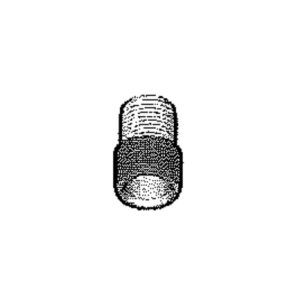

A bit retaining spacer (also called a retaining ring, bit retaining sleeve, or retaining bush) is a precision-engineered component used in Down-The-Hole hammers to securely retain the drill bit within the hammer shank; maintain axial alignment between the bit and the hammer casing; allow limited axial movement of the bit for impact transfer and flushing; protect adjacent components (such as the chuck and the bit shank) from wear and deformation due to repeated impact and rotation; essentially, the spacer ensures that the percussion energy from the hammer piston is efficiently transmitted to the bit while minimizing mechanical stress on other components.
Design: Usually cylindrical or ring-shaped, fitting between the hammer chuck and the bit shank shoulder. It has internal and/or external grooves for snap rings, locking keys, or threaded connections. Tight tolerances (typically 0.020.05 mm) to ensure proper bit movement without excess play. Machined passages that help with air/flushing flow to remove cuttings and reduce wear. Wear surface is hardened or coated to resist erosion and abrasion from rock dust and high-velocity air.
Applications:
- Mining and Quarrying: Production drilling, blast hole drilling
- Construction and Foundation: Piling, anchor holes, microtunneling
- Water Well and Geothermal: Drilling through hard or fractured formations
- Oil and Gas Exploration: In specialized air or foam DTH systems
- Geotechnical and Exploration Drilling: Core sampling and overburden systems
Materials: The spacer must withstand high impact loads, abrasion, and corrosive environments. Hardness typically ranges from HRC 4560, depending on the hammer design and drilling conditions.
Configurations: They are designed to fit various hammer sizes and designs (from 3″ to 12″ or more), with specific spacers matched to hammer and bit interfaces.