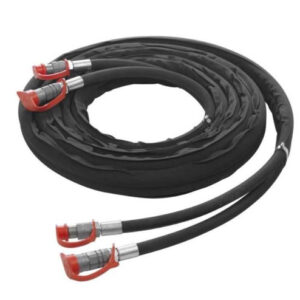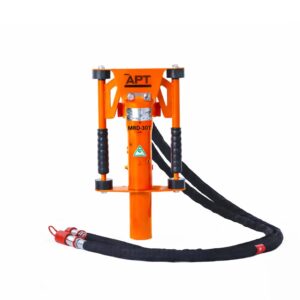
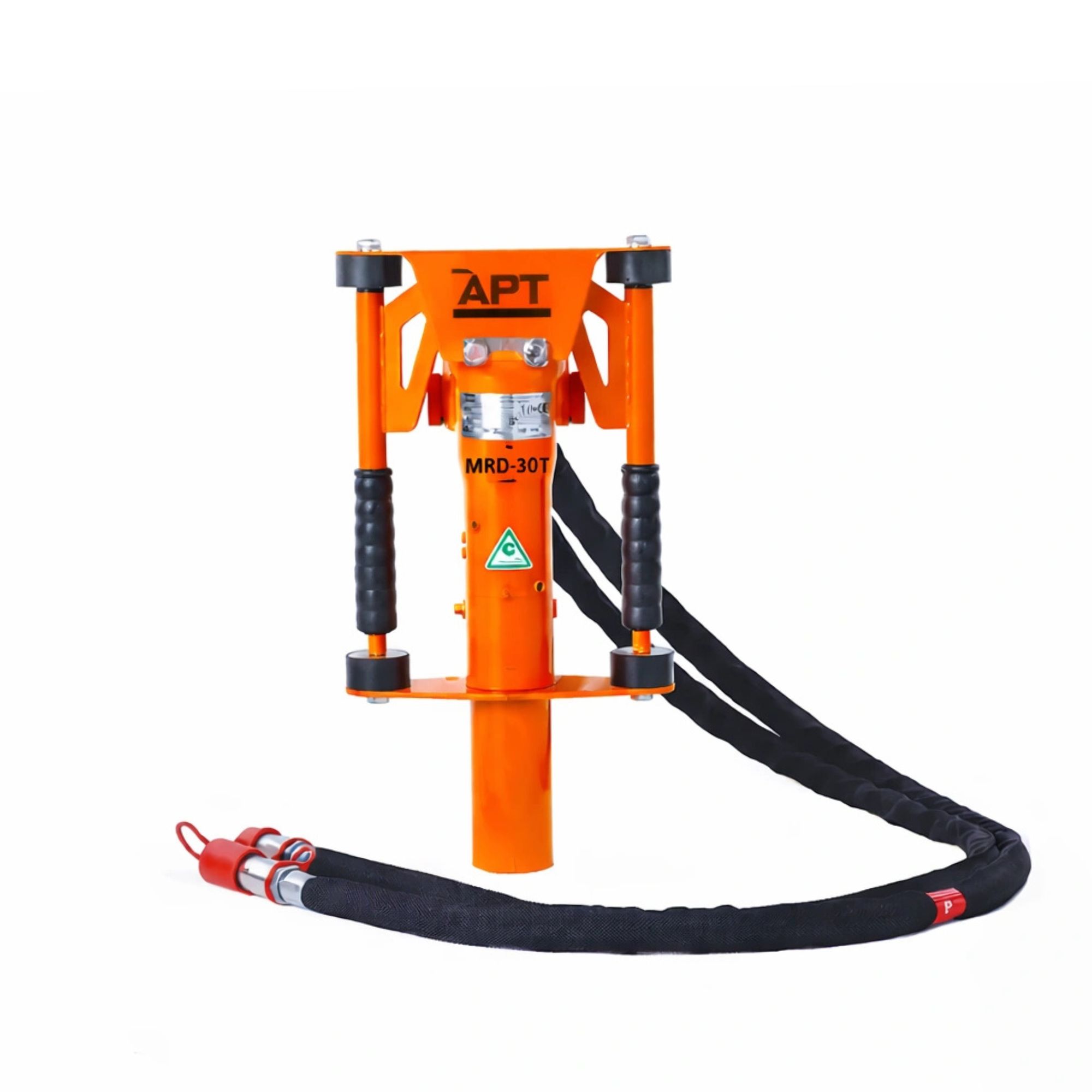
A hydraulic post driver is a specialized tool/attachment that uses hydraulic power (fluid under pressure) to drive posts, rods, stakes, tubes or other vertical elements into the ground rapidly, precisely and with far less manual labor compared to traditional methods. It is commonly used in fencing, road/guardrail installations, signage, anchoring and other applications where posts must be set in soil or other ground material.
Design:
- The trigger lever design allows handheld operation for smallerdiameter posts/rods/anchors, rather than requiring heavy skidsteer or excavator mounting.
- The opencentre hydraulic system means it is designed to be connected to a hydraulic power source which allows flow through the tool, rather than a closedcentre system.
- Given its relatively modest flow (5gpm) and pressure (~1,1601,450psi), the unit is optimized for smaller posts and stakes rather than huge structural piles.
- The availability of various adaptors indicates versatility the tool can drive a range of materials with different cross sections (ground rods, tubes, fence posts, etc.).
- The blow rate of ~2,300 blows/min suggests fairly high frequency of strikes, enabling faster penetration for suitable materials/soil conditions.
- The vibration level (3 axes) is ~17.5m/s for this model
Applications:The MDR30T (or MDR30 series) is suitable for a range of applications including:
- Driving ground rods, stakes, anchors, smalldiameter posts. The spec sheet lists smalldiameter rods, anchors, stakes, etc. as target.
- Fencing applications: installing Tposts, line posts for agricultural or perimeter fencing, where a handheld hydraulic post driver is adequate.
- Signposts, delineator posts, light duty tubular posts, temporary event fencing.
- Light civil or infrastructure work: small posts for guardrails, barriers, or tubes/profiles in lighter soil conditions.
- Because of the adaptor availability (IDs down to 5/8″), also suitable for smaller rods/spikes in stake style applications.
Materials of Posts/Posts to be Driven
- The tool is optimized for lighterduty posts (smalldiameter rods). If you attempt very large steel Hbeams or heavy timber posts, you will likely exceed its performance envelope.
- For steel tubular posts: ensure the post outer diameter matches or is slightly under the adaptor inner diameter (e.g., 2.44″ adaptor) so the driver can properly engage and strike without slippage.
- For wood posts: ensure the post is properly sharpened or designed for driving; wood may split if lateral loads or misalignment occur.
- For concretefilled or heavy structural posts: verify if the tool can deliver the needed impact energy; likely you will need a larger model.
Soil and Site Conditions
- The high blow rate is good for softer soils (loam, sandy clay) but if you are driving into very hard soil, rock, or frozen ground, you may need a driver with higher singleimpact energy (rather than high frequency).
- Ensure the hydraulic power supply meets the requirements (i.e., ~5gpm, ~1,1601,450psi). If your hydraulic source is underflowing or has long hoses, you may lose performance.
- Because handheld, you need ergonomic control, proper alignment, and safe anchoring of the post prior to driving.
Maintenance / Durability
- Since this is a hydraulic hammertype device, periodic inspection of seals, hydraulic hoses, adaptors, and hammer components is important.
- Make sure the adaptors are properly selected for the post material to avoid damaging the driver or post (excess clearances cause misstrikes).
- Keep hydraulic fluid clean; contamination can accelerate wear of hydraulic pistons and valves.
- If working in outdoor, dusty or muddy conditions, ensure the driver body is cleaned regularly to prevent ingress of debris into moving impact parts.
Configuration:Trigger lever