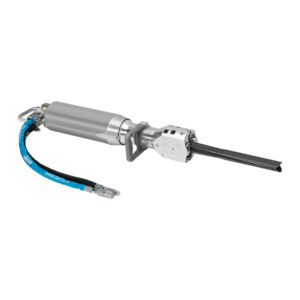
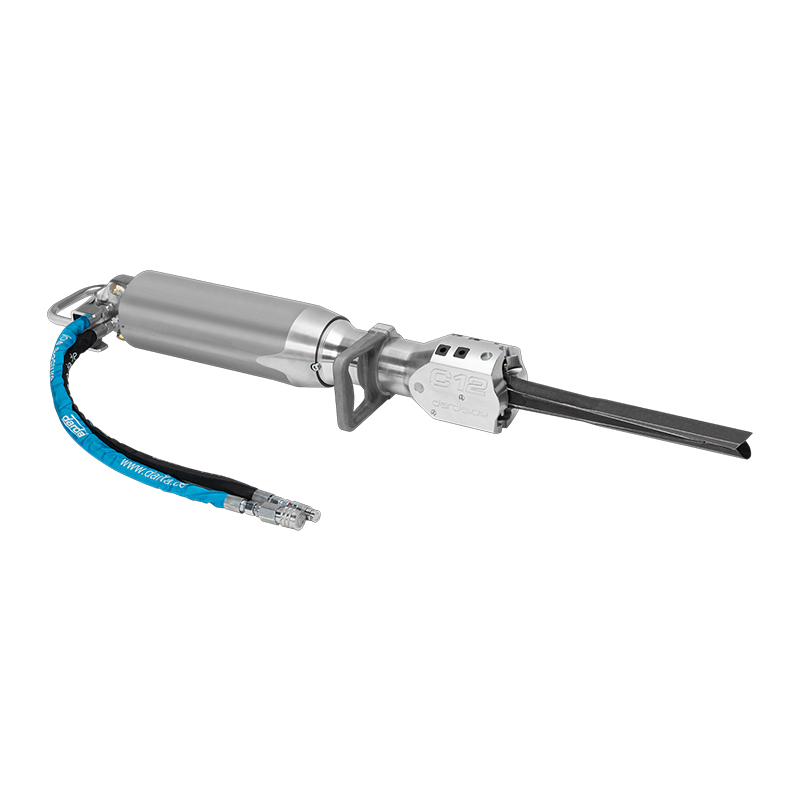
The Darda C12 is a high performance hydraulic splitting cylinder used for controlled demolition of rock and concrete, especially where vibration, noise, flying debris or dust must be minimized. It is part of the Darda C2 through C12 series of handheld splitting tools.
Design:
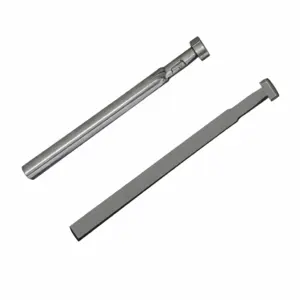
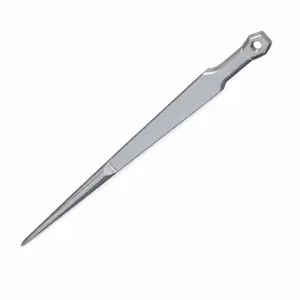
- Splitting principle (wedge system): A bore hole of specified diameter and depth is drilled into the material. Then the wedge set (one central wedge and two counter-wedges) is inserted. When hydraulic pressure is applied the central wedge drives between the two counter wedges, forcing them outward and creating a crack from the inside out.
- High-pressure hydraulics: The system operates at pressures up to ~50MPa (500bar) for the splitting cylinder.
- Compact & portable design: Despite the high force, the C12 is relatively lightweight (3132kg depending on variant) and sized so it can be used by a single operator in many contexts.
- Robust construction: The main cylinder body is constructed of high quality aluminum and steel materials, while the counter wedges receive a specially-developed hard metal (carbide) layer to resist extreme stresses and wear.
- Interchangeable wedge sets / inserts: The C12 comes in variants (e.g., N,L,W) reflecting different wedge set types and splitting distances. This allows adapting the tool to different material conditions and required splits.
- Precise control and safe use: Because the splitting direction can be predetermined and the tool causes very low vibration, little dust and very few safety hazards (e.g., no flying rock like blasting), its suitable for confined spaces and sensitive environments.
Applications: The C12 splitter is designed for a wide range of demanding splitting tasks, particularly where conventional blasting or heavy mechanical impact methods are undesirable. Typical applications include:
- Splitting of rock (hard rock, boulders, quarrying) and concrete (reinforced or unreinforced) where high control is needed.
- Demolition in confined spaces, such as underground, inside buildings, tunnels, or where vibration and noise must be minimized.
- Controlled removal of structural elements (pile heads, wall sections) or secondary splitting of large concrete blocks for recycling or removal.
- Applications in sensitive or populated environments (e.g., museums, shopping centers) where blasting or heavy impact methods cannot be used
Materials and Component Construction:
- Cylinder body and structural frame: Constructed of high quality aluminum (for weight reduction) combined with steel for strength. The combination allows a high strength to weight ratio, making it portable yet robust.
- Wedge set / counter-wedges: The counter-wedges are subjected to extremely high radial forces during splitting. They are made of steel and receive a hard metal (carbide) layer through a special hardening process, thereby resisting wear, corrosion and seizure under high loads.
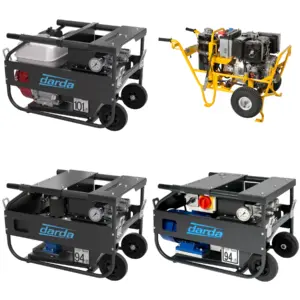
- Hydraulic hoses and couplings: Multilayer, high pressure hoses with burst protection are used to connect the splitter to the hydraulic power pack. These components must withstand the full system pressure (~500bar) and jobsite conditions.
- Seals, valves, control handle: High quality hydraulic seals, a control valve integrated into the splitter for user control, and a locking system for quick change of inserts/wedges. These elements are designed for reliability in harsh operating conditions.
- Finish and coatings: Protective coatings on steel surfaces to guard against corrosion, abrasion from jobsite debris, and damage from repeated use. The alloy/steel body plus hard metal wedge surfaces ensure durability.