
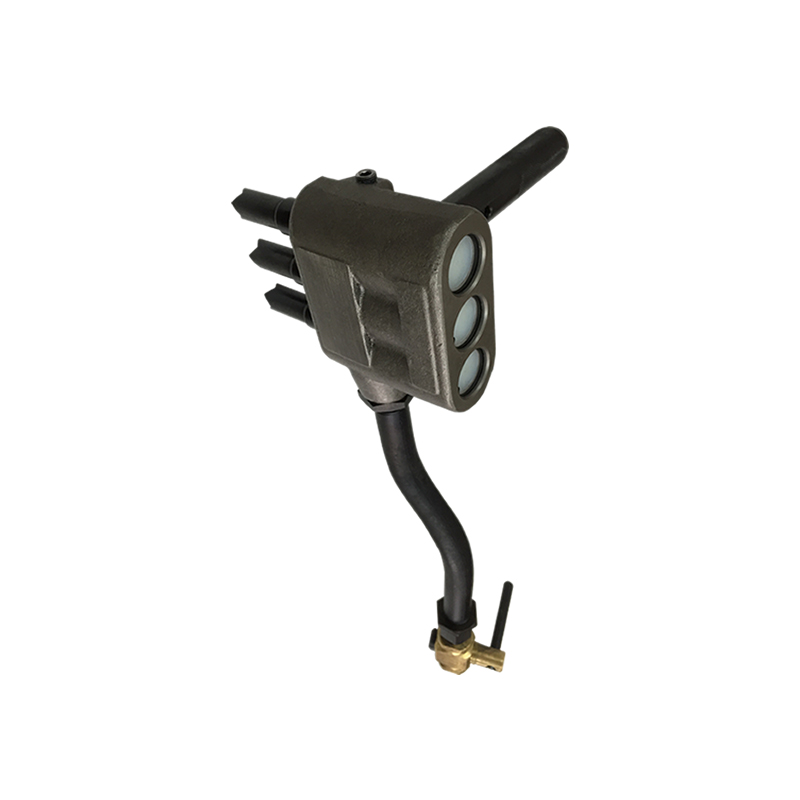
A triple-piston scaler (also known as a triple-piston needle scaler or triple-piston chisel scaler) is a pneumatic surface preparation tool that uses three synchronized pistons to deliver rapid impact blows to a bundle of needles or a chisel tip. Compared to a single-piston scaler: It delivers higher impact energy and smoother operation; The three pistons strike in sequence, reducing vibration and increasing removal rate; It is favored for heavy-duty cleaning such as ship hull maintenance, rust/scale removal, and concrete surface prep.
Design:
- Triple Piston Assembly: Three hardened steel pistons reciprocate within parallel cylinders, driven by compressed air. The staggered motion provides overlapping impact cycles for smoother performance.
- Air Distribution Valve System: Controls air flow to each piston chamber sequentially to maintain synchronized impact.
- Needle or Chisel Holder: The front tool retainer that holds either a bundle of needles (usually 19 or 28) or a flat chisel for scaling surfaces.
- Main Housing/Body: Cylindrical casing that contains the three pistons; designed to absorb vibration and withstand repeated impacts.
- Handle & Trigger Valve: Allows the operator to start/stop airflow; typically a lever or pistol-grip trigger design.
- Air Inlet Port: Usually ¼” NPT or BSP thread for connecting to a compressed air line.
- Exhaust System: Ports or mufflers that vent used air; designed to reduce noise and direct exhaust away from the operator.
- Optional Needle Cage/Sleeve: Guides and retains the needle bundle, allowing easy replacement and conversion between needle and chisel configurations.
Applications: Triple-piston scalers are heavy-duty industrial tools used for removing rust, scale, paint, and slag from metal and concrete surfaces. Their smooth operation and high output make them ideal for extended-use cleaning tasks.
- Marine/Shipbuilding: Removing heavy rust and scale from ship hulls, decks, tanks, and ballast compartments
- Oil & Gas/Offshore: Cleaning rig structures, platforms, and pipelines prior to inspection or repainting
- Steel Fabrication/Welding: Removing weld slag, spatter, and mill scale before coating
- Construction: Concrete surface scaling and preparation for patching or coating
- Foundry/Casting Shops: Cleaning cast parts, removing oxide scale, flash, or mold residues
- Railway & Bridge Maintenance: Rust removal and surface prep for repainting or inspection
Materials:
- Housing/Body: Forged or machined aluminum alloy or steel – Structural strength; aluminum for lightweight portability, steel for durability
- Pistons: Hardened alloy steel (e.g., 4140 or S7 tool steel) – Wear resistance and high fatigue life under impact
- Cylinder Sleeves: Nitrided steel or chrome-plated steel – Smooth low-friction surface and corrosion resistance
- Valve Components: Brass, stainless steel, or anodized aluminum – Corrosion-resistant air control parts
- Needles/Chisels: High-carbon tool steel, heat treated – Withstands repeated impacts and abrasion
- Seals & O-Rings: Nitrile (Buna-N) or Viton – Air sealing and resistance to compressor oil
- Exhaust Muffler/Silencer: Sintered bronze or polymer composite – Reduces noise and manages airflow direction
- Handle Grip: Rubber or composite polymer – Operator comfort and vibration isolation