
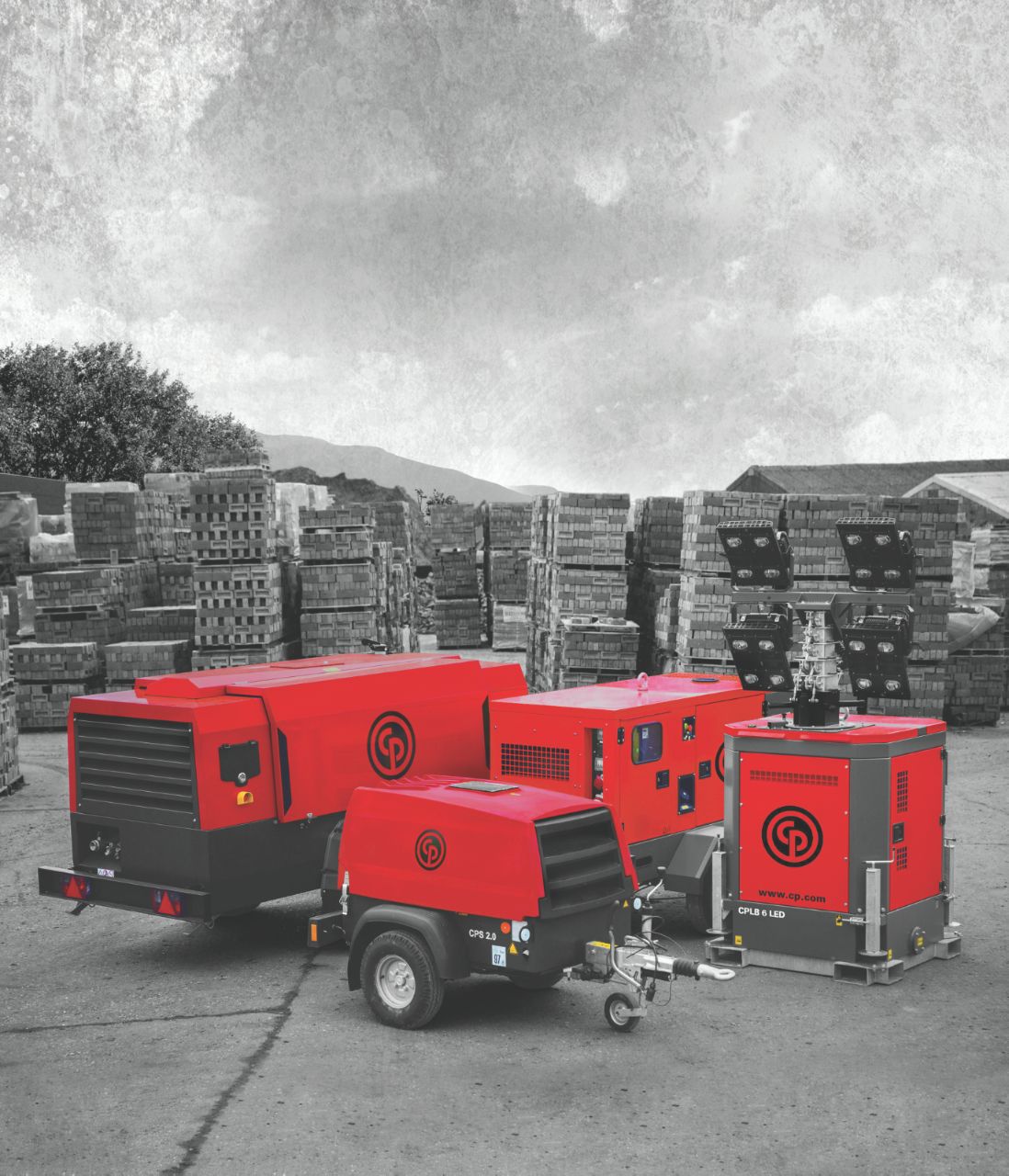
Chicago Pneumatic Portable Air Compressors
The full CPS range: 15 models from 95 to 1,373 CFM, 100 psi jobsite air through 507 psi high-pressure drilling air. Every model on this page is backed by a Chicago Pneumatic factory data sheet and every one is available to order.
The short version
One or two hand tools? Start in the 95 to 185 CFM group. A crew, or a blast pot? The 238 to 410 CFM group. Multiple crews or plant work? The 650 to 867 CFM group. Drilling? The high-pressure line runs 678 to 1,373 CFM at 232 to 507 psi for drill and blast, water well and geothermal. Size on actual free air delivery, not the model number — the tool-by-tool table does the math. Compare every brand in the all-brands air compressor category or narrow to diesel-driven compressors, and see the air compressor buyer’s guide for cross-brand sizing. Not sure? Call 1-888-883-5144 with your tool list.
Hand-Tool Air: 95 to 185 CFM
The four machines that feed breakers, sinker drills, chipping hammers and tampers. If you are running hand tools rather than a plant, your compressor is almost certainly in this group.
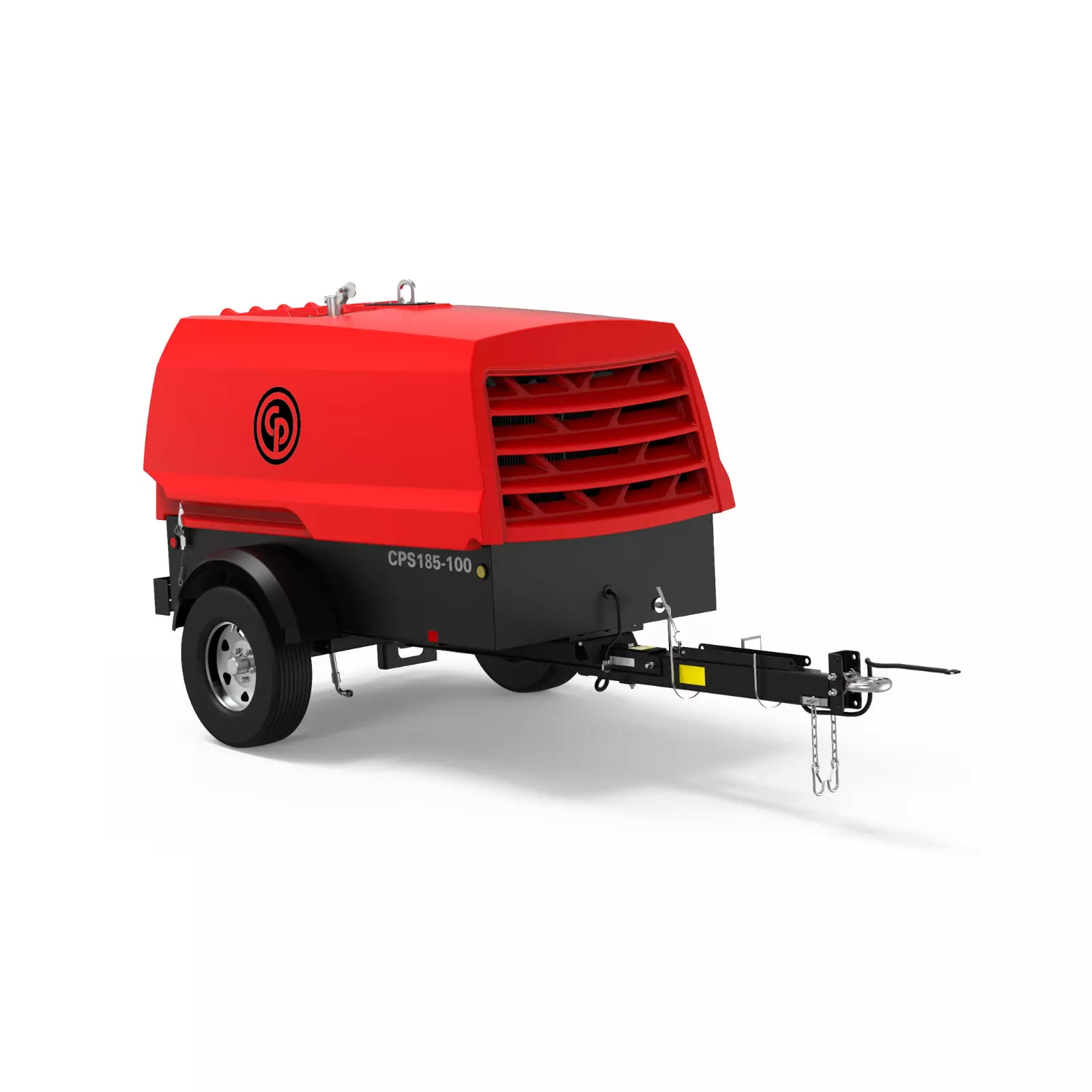
CP CPS 185 Air Compressor
The volume machine of the whole CP range, and the one most crews end up on. A liquid-cooled, turbocharged four-cylinder Kohler KDI 1903 TCR Tier 4 Final diesel running 1,800 rpm unloaded and 2,500 loaded, saving up to 12 percent on fuel against others in its class. The spin-on separator services in under an hour with no special tools, and the 22.3 gallon tank runs a full shift without a fuel stop.
Choose it when: You are running two 60 lb breakers at once, a 45 or 60 lb class sinker drill, or a crew on mixed tools, and you cannot afford to run out of air mid-shift.
Key specs
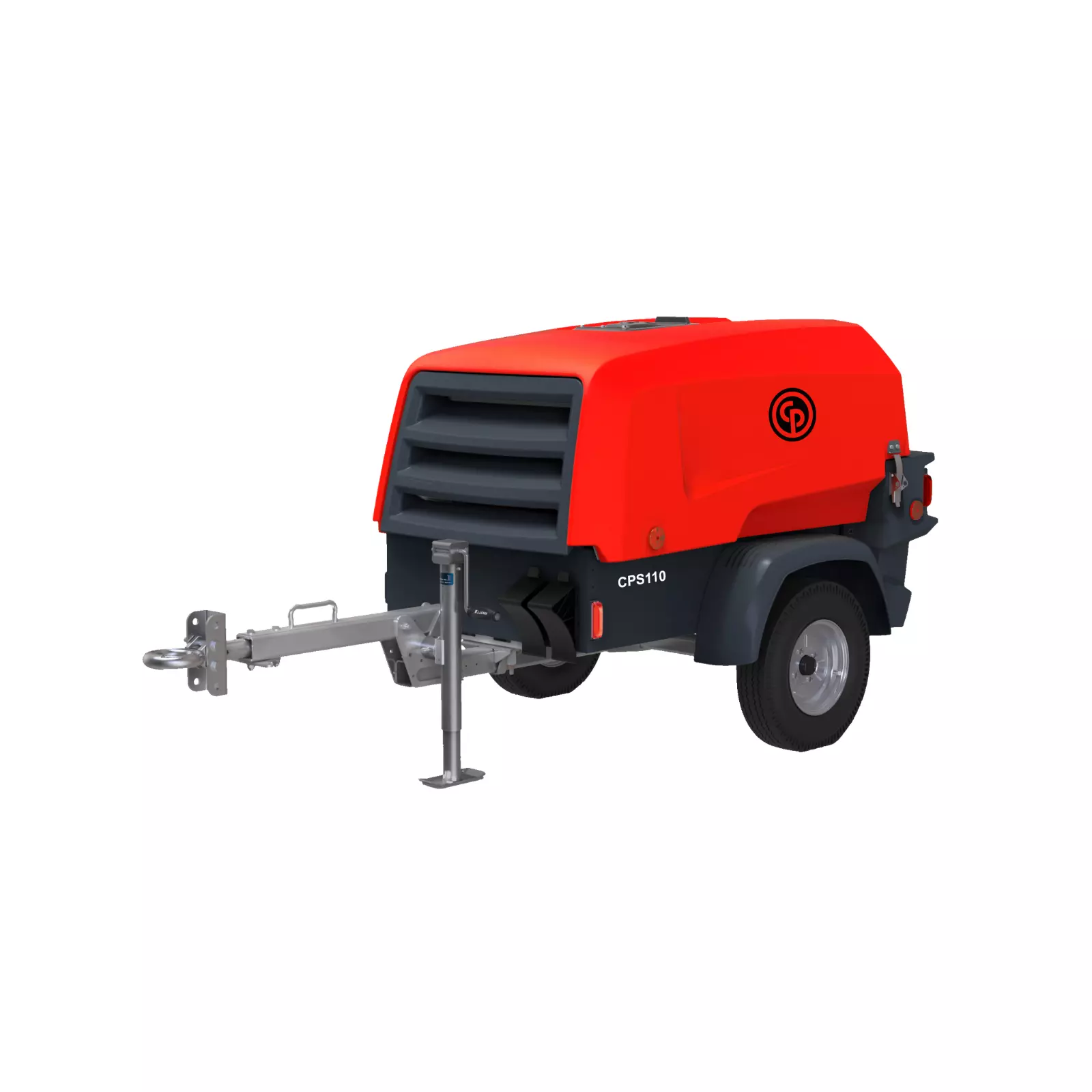
CP CPS 110 Air Compressor
The compact towable. A liquid-cooled three-cylinder Kubota D902 Tier 4 Final diesel, under 1,200 lb, so it tows behind a half-ton and fits where a bigger machine will not. No SCR and no DPF means no regeneration cycles, no DEF to carry, and materially lower repair costs. Cold start to -4 degrees F as standard, not as an option.
Choose it when: You run one or two air tools at a time and want the smallest machine that will not starve them, or you need a compressor that fits a tight site and a light tow vehicle.
Key specs
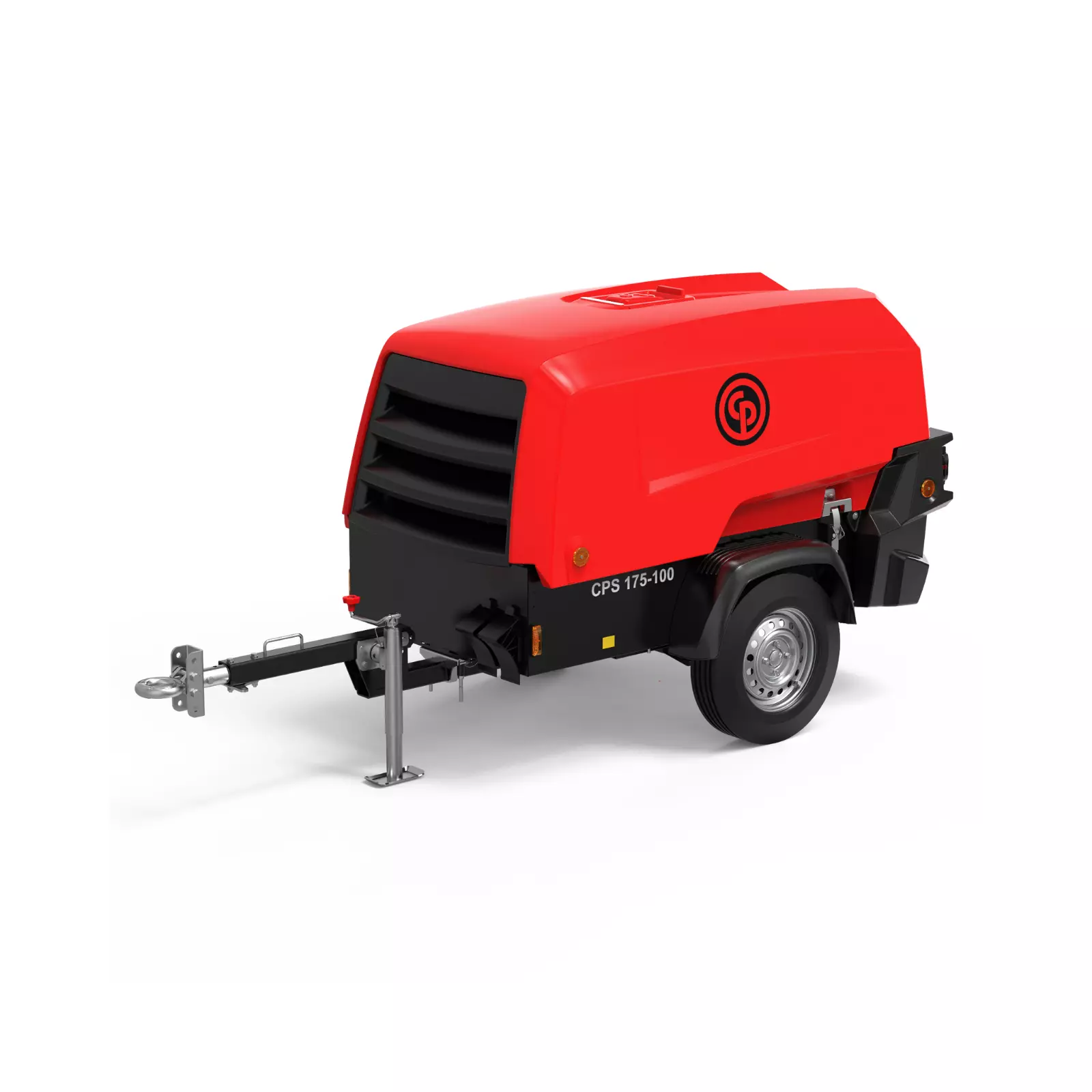
CP CPS 175 Air Compressor
The turbocharged four-cylinder answer to the 185. Chicago Pneumatic rate it explicitly for two 90 lb breakers, which is more than the CFM number alone suggests, and the Kubota V1505-CR-T-E5B Tier 4 Final runs to 122 degrees F ambient. Cold start is -4 degrees F as standard.
Choose it when: You want two-breaker capability with a smaller fuel tank and a lighter machine than the 185, or your fleet is already standardised on Kubota.
Key specs
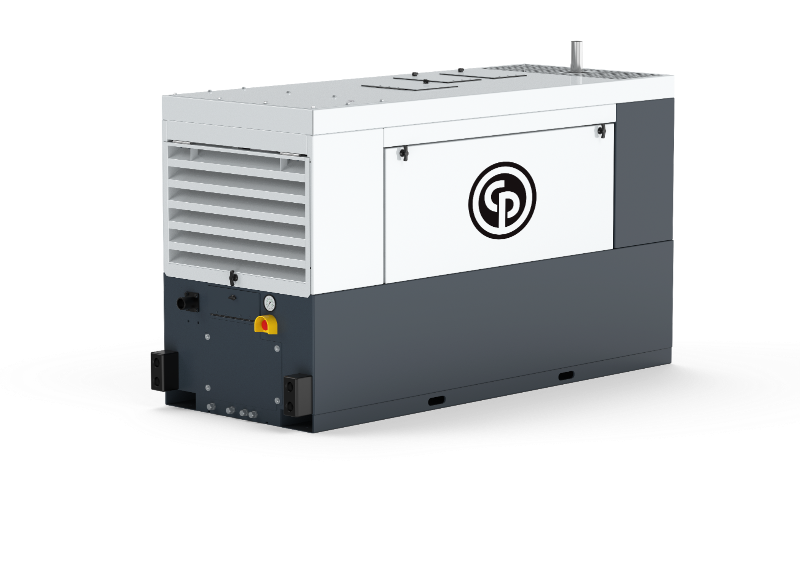
CP CPS 185 KDU Utility Mounted Air Compressor
The odd one out, and the one people miss. The KDU is built to bolt onto a service truck deck rather than tow behind it, so the air travels with the truck. A 49 hp Kubota V2403-CR-EF02 Tier 4 Final drives CP’s C111 element, and it is rated to 125 degrees F ambient with the canopy doors closed — the highest ambient rating anywhere in the CPS line.
Choose it when: You run a service or utility body and want air on board permanently, without giving up a hitch or dragging a trailer into a work zone.
Key specs
Crew and Blast Air: 189 to 410 CFM
Where multi-pressure capability starts to matter. Every machine in this group can be dialled to the pressure the job actually needs, which is what lets one compressor cover work that would otherwise take two.
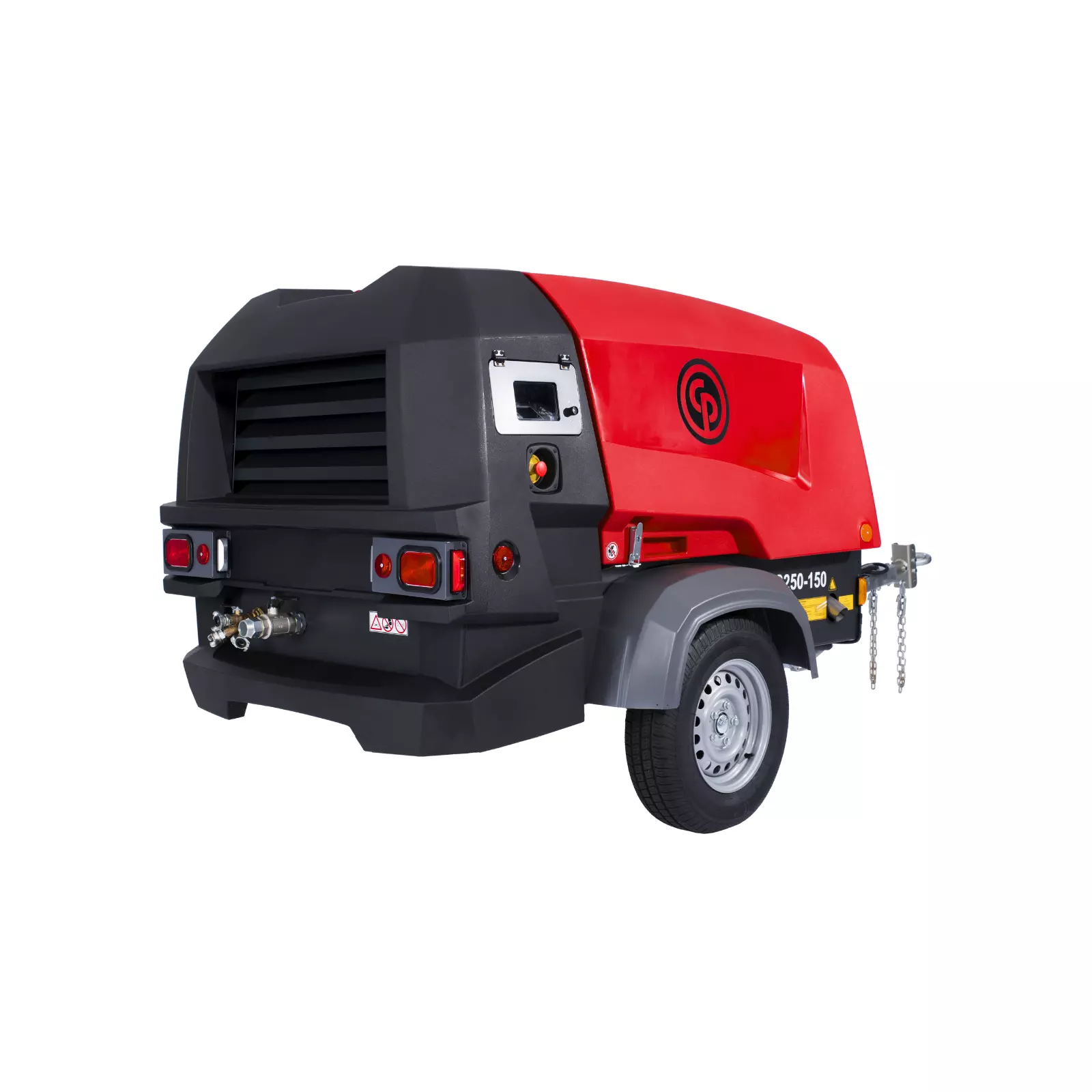
CP CPS 250-150 MP Air Compressor
The Xc2003 controller with multiple-pressure regulation lets you set anywhere from 72 to 150 psi in 2 psi increments, so the same machine serves a breaker crew at 100 psi and a pipeline test at 150. Enclosed in a sound-attenuated steel frame with a polyethylene canopy, and compact enough to manoeuvre on a tight site.
Choose it when: Your work moves between pressures, or you are near occupied buildings and the sound attenuation earns its keep.
Key specs
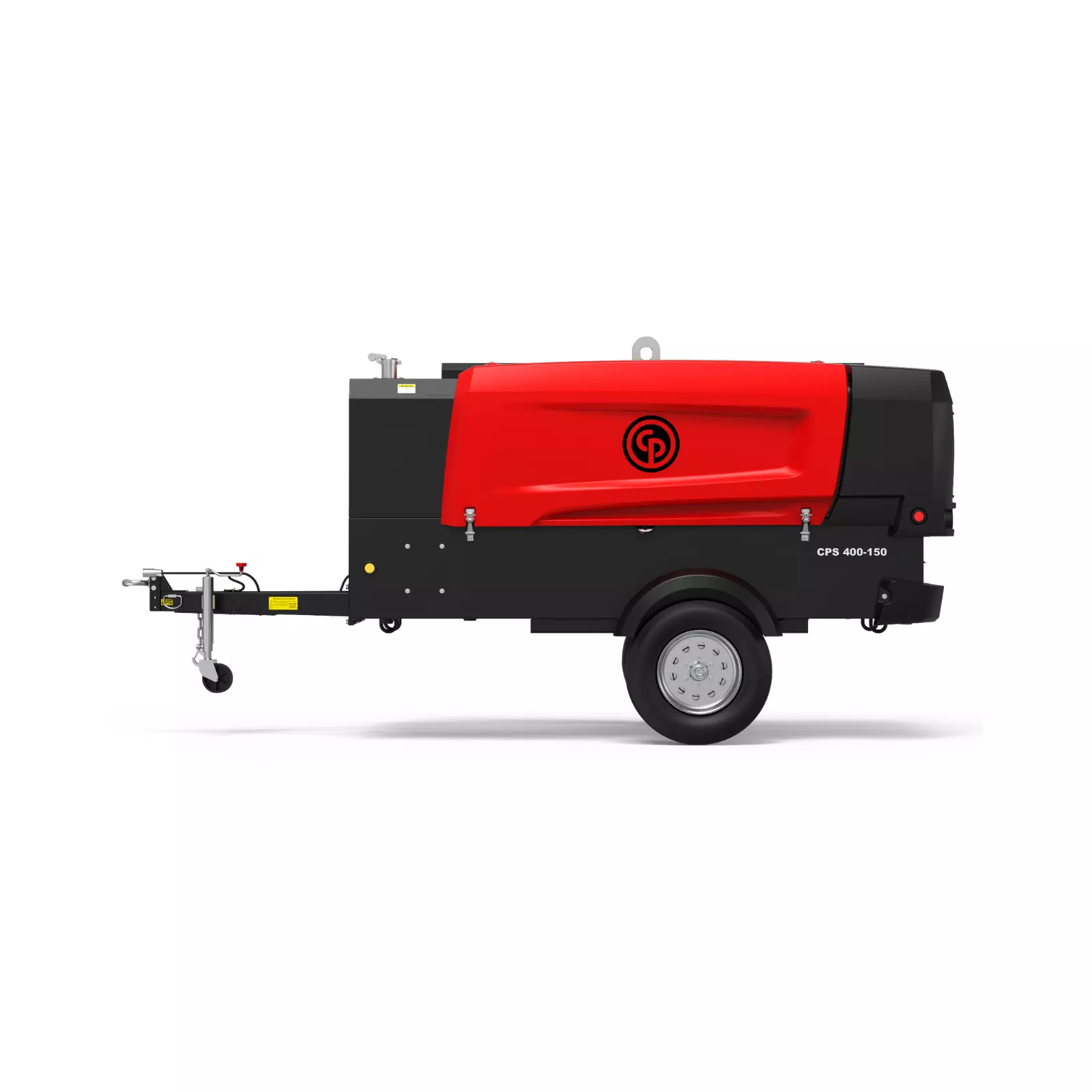
CP CPS 400-150 Air Compressor
The C106 compression element with efficient oil extraction, large-capacity oil cooling and high-efficiency two-stage filters for genuinely clean air. Large gull-wing doors open the whole machine for service, and the oil separator changes in under ten minutes. The Xc2003 controller handles unloaded starting, glow plugs and exhaust after-treatment.
Choose it when: You are feeding a full crew, a blast pot, or several tools at once and want 400 CFM with service access that does not cost you a morning.
Key specs
CP CPS 400-150 JD Air Compressor
The John Deere-engined 400, and the only machine in the range that holds its full output at both pressures — a flat 410 CFM whether you are at 100 or 150 psi. Runs the newer Xc2004 controller. If your yard is standardised on John Deere for parts and service, this is the 400 to buy.
Choose it when: You want no flow penalty at 150 psi, or your fleet is already John Deere and you would rather not add a second engine brand to the parts shelf.
Key specs
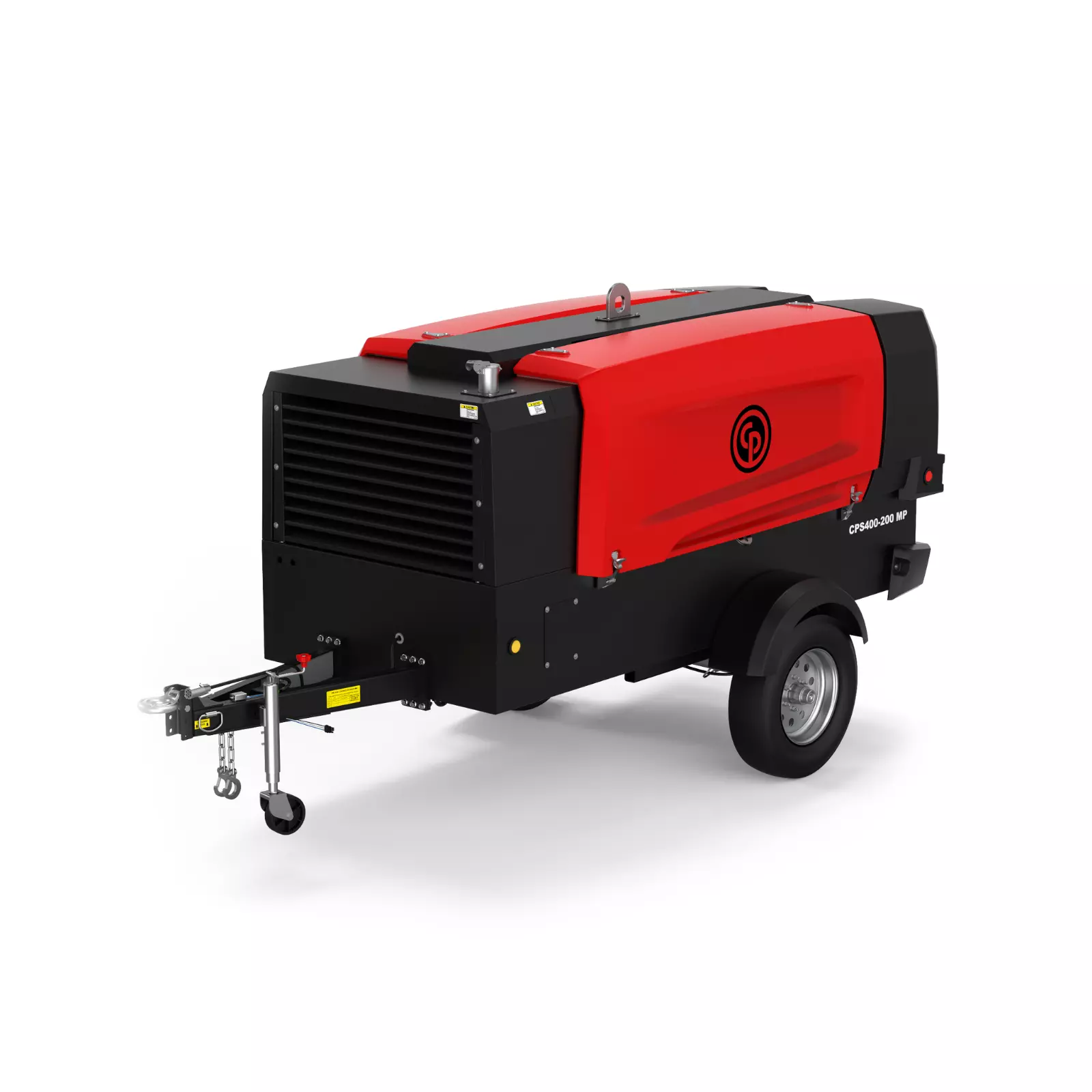
CP CPS 400-200 MP Air Compressor
The 400 that reaches 200 psi. Same C106 element, gull-wing service access and ten-minute separator change as the 400-150, with the Xc2003 multiple-pressure system adding a third pressure step. At 350 CFM and 200 psi it covers work that normally demands a much larger machine.
Choose it when: You need 200 psi occasionally but not enough to justify a dedicated high-pressure unit, and you want one compressor to cover both duties.
Key specs
High-Volume Air: 575 to 867 CFM
Six-cylinder machines for multiple crews, large blast operations, pipeline work and plant supply. Fuel economy stops being a detail at this size and starts being the operating cost.
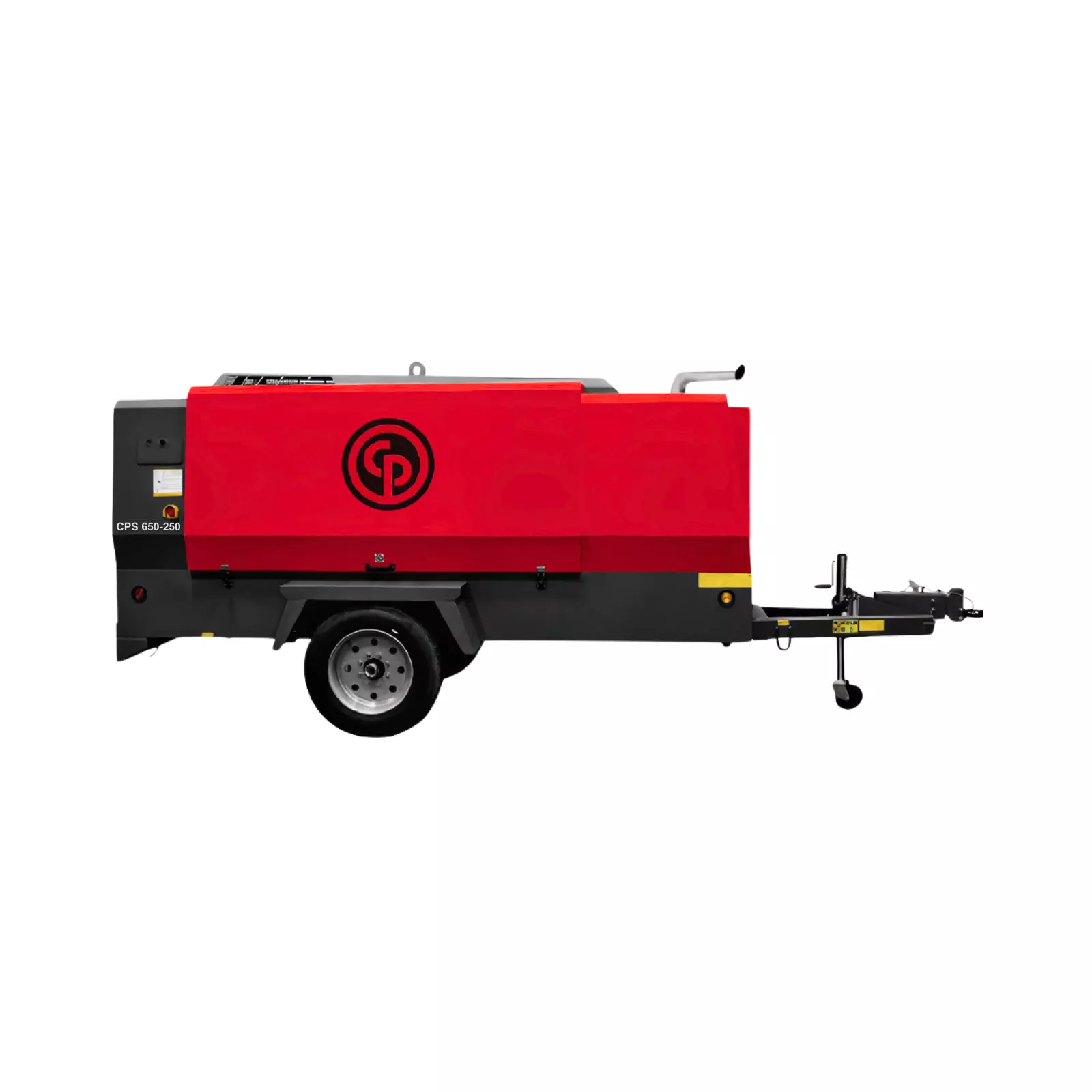
CP CPS 650-200 Air Compressor
A six-cylinder turbocharged John Deere 6068HFC08 that trims engine power seamlessly as load varies, cutting fuel consumption by up to 15 percent. Reaching 250 psi puts it in reach of work most standard-pressure machines cannot touch, and the 88 gallon tank keeps it there.
Choose it when: You need genuine 250 psi capability without stepping up to the dedicated high-pressure line, and fuel burn over a long contract matters more than purchase price.
Key specs
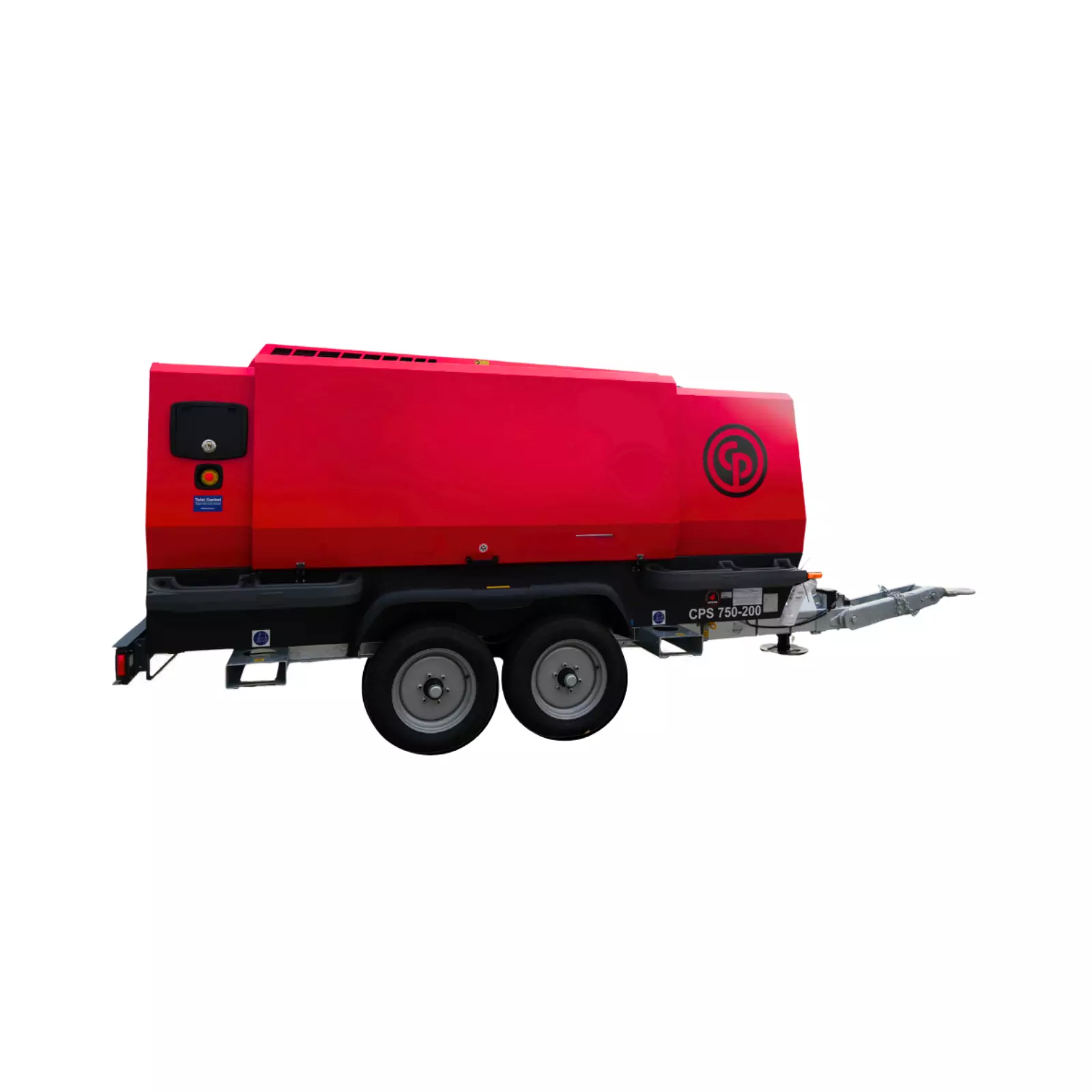
CP CPS 750-200 CUD Air Compressor
A six-cylinder turbocharged Cummins with the Xc2003 multiple-pressure system, holding a full 785 CFM at both 100 and 150 psi and still delivering 690 CFM at 200 psi. That flat curve across the first two pressure steps is unusual and is the reason this machine gets specified for mixed-duty fleets.
Choose it when: You are running several crews or a large blast operation and want one machine that does not lose output the moment you raise the pressure.
Key specs
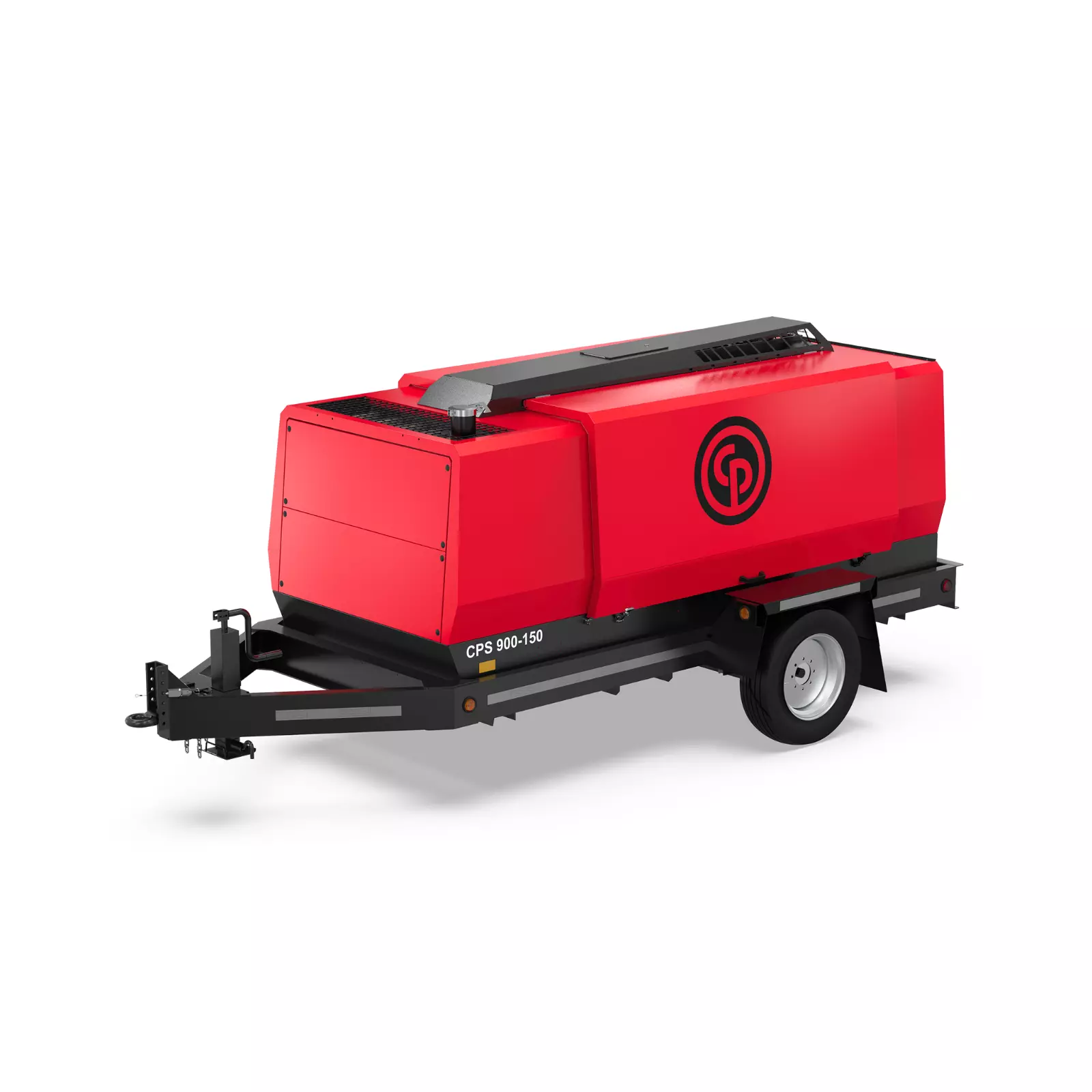
CP CPS 900-150 CUD Air Compressor
Cummins-powered, and specified by Chicago Pneumatic for instrument-quality air. At 850 CFM on 100 psi it supplies large multi-tool operations and plant work, on a 110 percent spillage-free containment frame that keeps a fuel or oil release off the ground.
Choose it when: You need volume with air clean enough for instrumentation, and the site has spill containment requirements you have to satisfy on paper.
Key specs
CP CPS 900-150 JD Air Compressor
The highest standard-pressure flow anywhere in the CPS range at 867 CFM. A six-cylinder turbocharged John Deere 6068HFC08 that trims power under varying load for up to 15 percent lower fuel consumption, with an 88 gallon tank to match the appetite.
Choose it when: You want the most air the standard-pressure line will give you, and you would rather have John Deere parts availability behind it.
Key specs
High-Pressure Drilling Air: 232 to 507 psi
Built for ground engineering and drilling — drill and blast, water well, geothermal. An integrated performance management system and smart air controller let one compressor be matched to several applications, Eco Mode cuts fuel use up to 50 percent during idle periods, and all three are no-DPF designs.
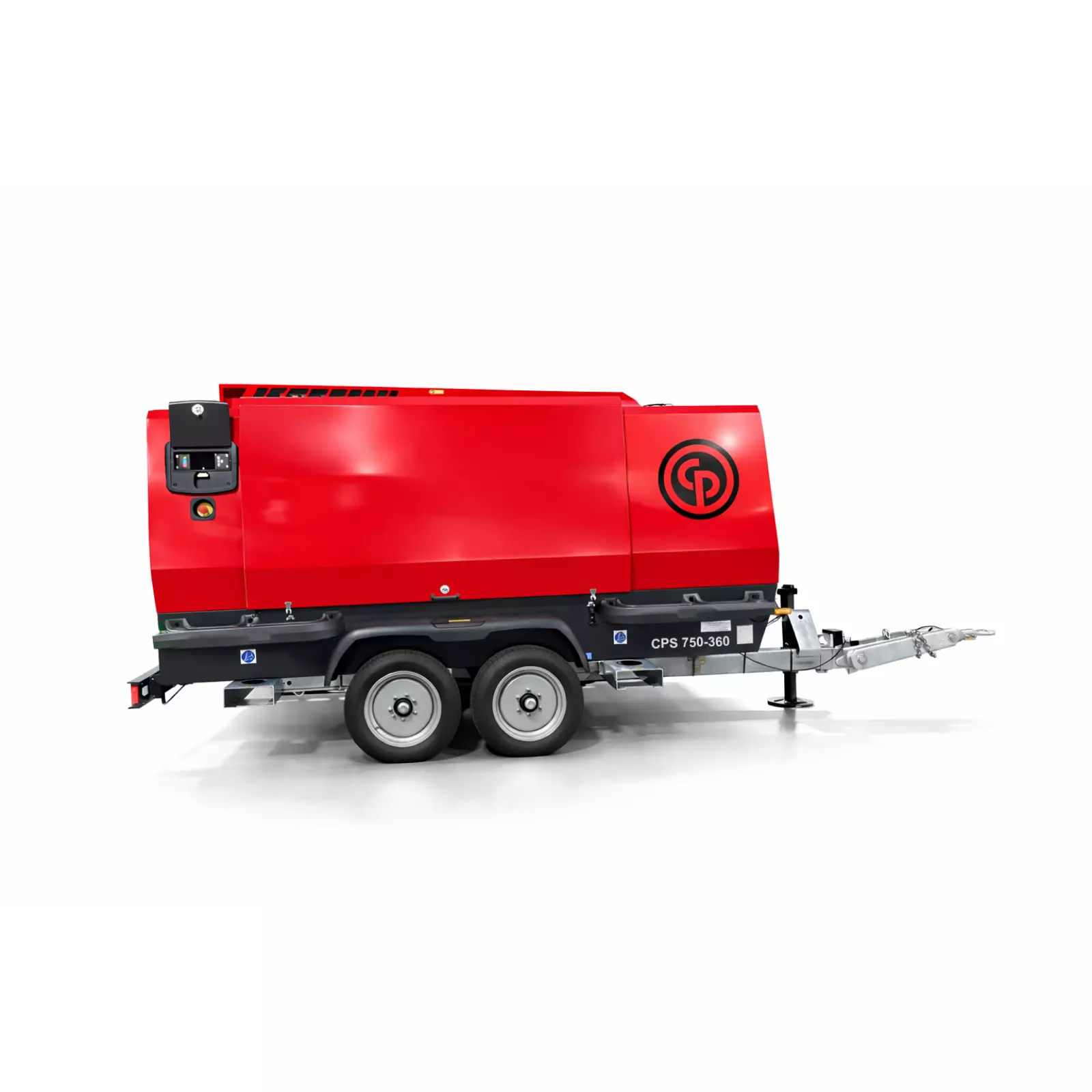
CP CPS 750-360 High Pressure Air Compressor
The entry point into the high-pressure line and by far the lightest of the three at 7,672 lb wet. A CP-patented in-house screw element on a 6.7 litre Cummins with the Xc2004 controller. Nominal receiver pressure 363 psi, and it holds 699 CFM at both 232 and 290 psi before easing to 678 CFM at full pressure.
Choose it when: You are drilling and need real high-pressure air, but a 15,000 lb machine is more than the site, the tow vehicle or the budget will take.
Key specs
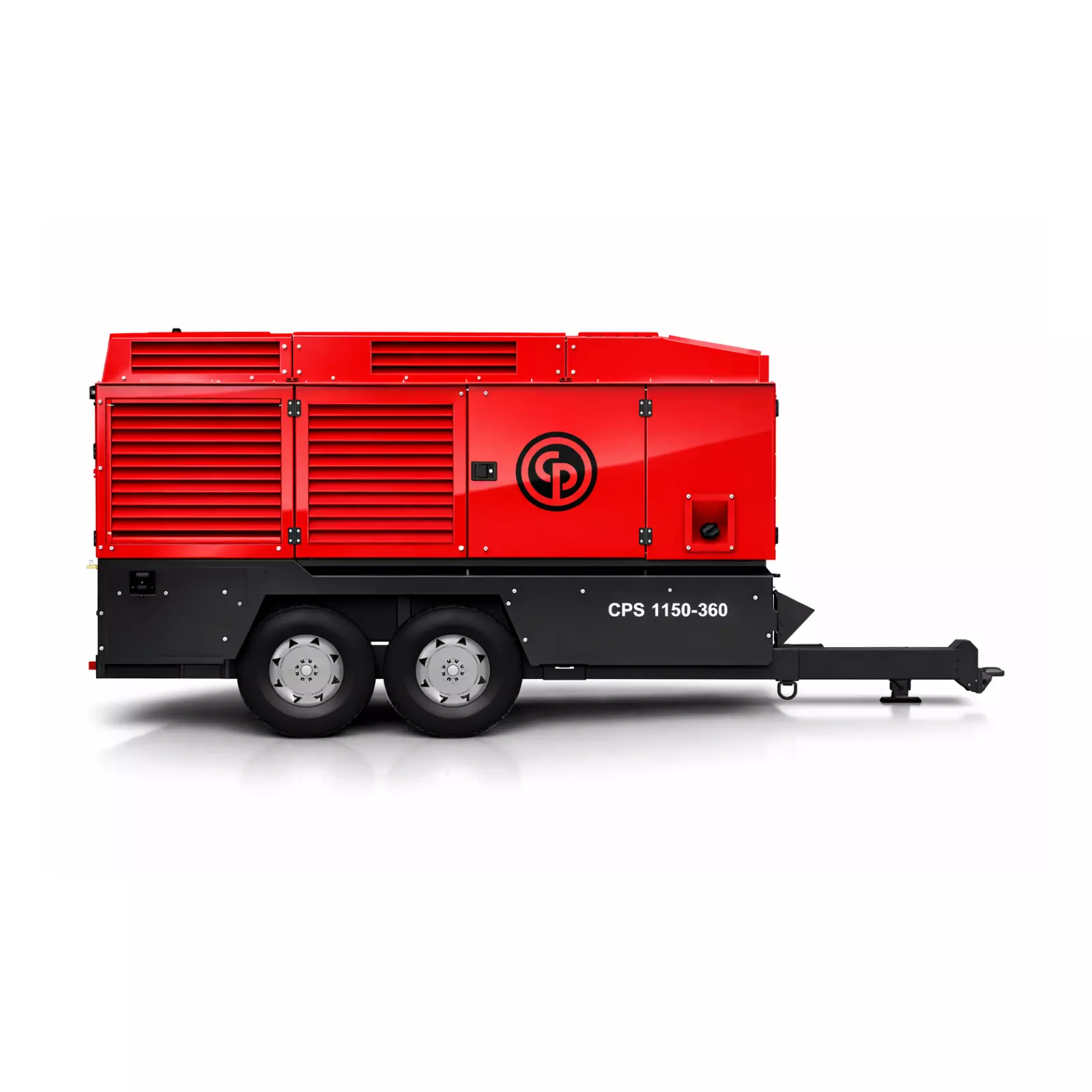
CP CPS 1150-360 High Pressure Air Compressor
A DPF-free 493 hp Scania DC13 driving the new-generation C190 plus J34 screw element. At 15,551 lb it is the lightest machine in its capacity class, and the engine is supported on rubber buffers inside a compact sound-attenuated canopy. An external fuel tank connection extends autonomy well past the 174 gallon onboard tank.
Choose it when: You are running a production drill rig and need four-figure CFM at 360 psi without hauling the heaviest machine in the class.
Key specs
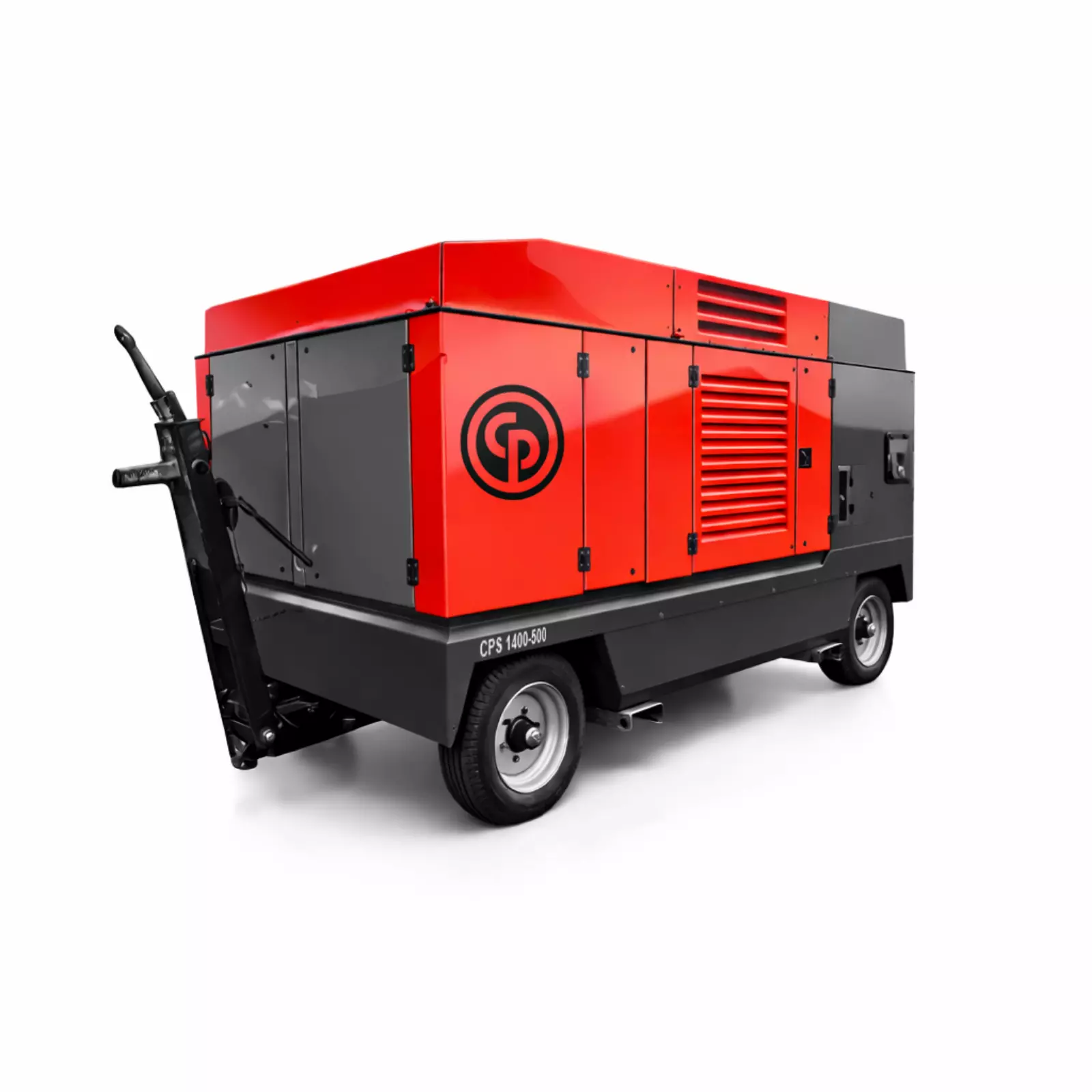
CP CPS 1400-500 High Pressure Air Compressor
The largest machine Chicago Pneumatic build in this range, and the only one reaching 507 psi. A Scania DC16 drives the same C190 plus J34 element, with a 500-hour engine service interval, a battery cut-off switch and a fully automatic step-less speed regulator that matches engine speed to air demand rather than running flat out.
Choose it when: You are on deep drilling, geothermal or large-diameter water well work where nothing below 500 psi will do the job.
Key specs
What Size Do You Actually Need?
Add up the CFM of every tool you want running at the same time, then add about 25 percent for hose losses and duty cycle. Then size against the compressor’s ACTUAL free air delivery, never its model number.
The trap: a machine badged “185” delivers 180 CFM and a machine badged “110” delivers 95 CFM. A few go the other way — the CPS 900-150 JD actually delivers 867 CFM. Buying to the badge is how crews end up one tool short of the air they paid for.
| CP tool | Air needed | +25 percent | Smallest CPS that covers it |
|---|---|---|---|
| CP 4123 chipping hammer | 27 CFM | 34 CFM | CPS 110 |
| CP 0004 backfill tamper | 28 CFM | 35 CFM | CPS 110 |
| CP 0112 breaker (30 lb) | 45 CFM | 56 CFM | CPS 110 |
| CP 1210 breaker (40 lb) | 48 CFM | 60 CFM | CPS 110 |
| CP 0022 rock drill (30 lb) | 56 CFM | 70 CFM | CPS 110 |
| CP 1260 breaker (60 lb) | 63 CFM | 79 CFM | CPS 110 |
| CP 1290 breaker (90 lb) | 81 CFM | 101 CFM | CPS 175 |
| CP 1260 breaker + CP 4123 chipping hammer | 90 CFM | 113 CFM | CPS 175 |
| CP 0032 rock drill (45 lb) | 103 CFM | 129 CFM | CPS 175 |
| Two CP 1260 breakers | 126 CFM | 158 CFM | CPS 175 |
| CP 0069 rock drill (60 lb) | 130 CFM | 163 CFM | CPS 175 |
| Two CP 1290 breakers | 162 CFM | 203 CFM | CPS 250 |
| Two CP 0069 rock drills | 260 CFM | 325 CFM | CPS 400 |
| Four-tool crew, mixed breakers and drills | ~350 CFM | ~440 CFM | CPS 650 |
| Two crews or a large blast operation | ~600 CFM | ~750 CFM | CPS 750 or 900 |
Swipe the table sideways to see every column.
Tools These Compressors Feed
Everything below runs on shop air from a CPS machine. CFM figures are on each product page.
Chicago Pneumatic Air Compressor FAQ
What size air compressor do I need for a jackhammer?
For a single 60 lb class paving breaker such as the CP 1260, budget 63 CFM plus about 25 percent for hose losses and duty cycle, so roughly 79 CFM — the CPS 110 at 95 CFM actual delivery covers it. A 90 lb breaker like the CP 1290 needs 81 CFM, or about 101 CFM with headroom, which puts you on the CPS 175. Two 60 lb breakers want the CPS 175 as well, and two 90 lb breakers want the CPS 250. The sizing table on this page runs the math for every CP tool.
Why does a CPS 185 only deliver 180 CFM?
Model numbers in this class are nominal, not measured. The figure that matters is actual free air delivery at a stated pressure, and Chicago Pneumatic’s own leaflets rate the CPS 185-100 at 180 CFM and the CPS 110-100 at 95 CFM, both at 100 psi. We publish the leaflet numbers rather than the badge. A few models run the other way — the CPS 900-150 JD actually delivers 867 CFM at 100 psi.
How fast do CP air compressors ship?
Compressors are not a same-day item the way hand tools are. Models we hold in stock ship within one business day, and the rest ship within a few business days depending on configuration. Freight is quoted alongside the machine so the delivered cost is settled before you commit. If you have a date to hit, tell us when you call and we will confirm against real availability rather than a catalogue lead time.
What is the difference between the standard-pressure and high-pressure lines?
Standard-pressure machines, the CPS 110 through the CPS 900, run 100 to 250 psi and feed hand tools, blast pots and general jobsite air. The high-pressure trio, CPS 750-360, CPS 1150-360 and CPS 1400-500, runs 232 to 507 psi for ground engineering and drilling — drill and blast, water well, geothermal. They are different machines for different work, not bigger versions of the same thing.
Which models can adjust their working pressure?
The MP and multi-pressure machines. The CPS 250-150 MP adjusts from 72 to 150 psi in 2 psi increments through the Xc2003 controller; the CPS 400-200 MP runs 100, 150 or 200 psi; the CPS 750-200 CUD covers 100, 150 and 200 psi; the CPS 400-150 JD runs the Xc2004 controller; and the whole high-pressure line is adjustable across its range. Adjustable pressure raises utilisation, because one machine covers jobs that would otherwise need two.
Do these compressors have a DPF or need DEF?
It varies by model and it is worth asking before you buy. The CPS 110 and CPS 185 have no SCR and no DPF at all, so no regeneration cycles and no DEF to carry. The CPS 400 models do carry a 4.5 gallon DEF tank. The high-pressure CPS 1150-360 and its siblings are specifically no-DPF designs. Tell us where the machine will work and we will tell you which aftertreatment you are signing up for.
How cold can they start?
Most of the range starts at -13 degrees F with the cold weather package, and the CPS 110 and CPS 175 start at -4 degrees F as standard. The CPS 185 and the CPS 400 models start at 14 degrees F standard with -13 degrees F available as an option. If you work winters in the Rockies or the northern plains, specify it at quote time — retrofitting costs far more.
Is the CPS 185 KDU the same as the CPS 185?
No. The CPS 185-100 is a towable machine; the CPS 185 KDU is utility-mounted, built to bolt onto a service truck deck. The KDU delivers 185 CFM at 100 psi from a 49 hp Kubota V2403 and is rated to 125 degrees F ambient with the canopy doors closed, the highest ambient rating in the CPS line. Choose it when the air has to travel with the truck rather than behind it.
Which 400 should I buy?
There are three and they are genuinely different machines. The CPS 400-150 is Kohler-powered and gives 400 CFM at 100 psi, 375 at 150. The CPS 400-150 JD is John Deere-powered and holds a flat 410 CFM at both pressures. The CPS 400-200 MP adds a 200 psi step at 350 CFM. Pick on engine brand if your yard is standardised, on the flat curve if you work at 150 psi a lot, and on the MP if you need 200 psi occasionally.
How much does a CP air compressor cost?
These are quoted rather than listed. Configuration, options such as the cold weather package, and freight all move the number, and on a towable machine delivered cost depends heavily on where it is going. Call 1-888-883-5144 and we will price it the same day, with freight quoted alongside the machine.
Can I run this air straight into a sandblaster or instrument air?
Not without treatment. A rotary screw compressor delivers saturated air, and moisture causes corrosion, flash rust on blasted steel, pipeline problems and product defects. Pair the compressor with a CP CPD desiccant dryer, which takes the pressure dew point to -40 degrees F with no external power required.
Tell us what you are running, not what you think you need
List the tools you want going at the same time, or the hole you are drilling, and we will size the compressor against real CFM demand. If a smaller machine covers it, we will say so.