
Air Movers
A venturi air mover ventilates a tank, vault or manhole with no moving parts. Compressed air or saturated steam feeds nozzle jets inside the casting, and that small volume of high-velocity air drags a much larger volume of low-velocity air through the venturi and out the diffuser. Texas Pneumatic builds them in 3 in., 6 in., 8 in. and 10 in. sizes, tested at an independent lab to AMCA Standard 210 and fitted with a ground-wire connection for work in flammable atmospheres. Run one as a blower or turn it around as an exhauster. Feed it through a 1-1/2 in. hose off the compressed air supply and route the discharge with air ducting. Ships from Denver.
Showing all 5 resultsSorted by popularity
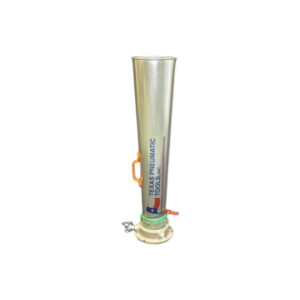 Price range: $610.00 through $1,650.00 Select options This product has multiple variants. The options may be chosen on the product page
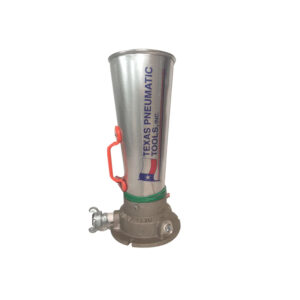 Price range: $445.00 through $675.00 Select options This product has multiple variants. The options may be chosen on the product page
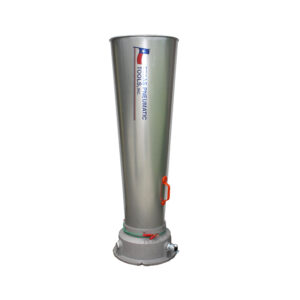 Price range: $985.00 through $1,400.00 Select options This product has multiple variants. The options may be chosen on the product page
 Price range: $1,450.00 through $1,900.00 Select options This product has multiple variants. The options may be chosen on the product page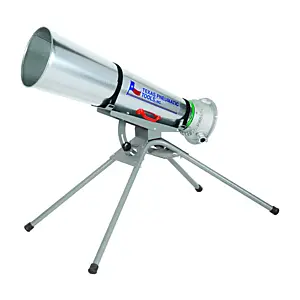
Showing all 5 resultsSorted by popularity
Why No Moving Parts Matters
There is no motor, bearing or blade in an air mover, so maintenance is minimal and there is nothing to spark or seize. That is why refineries, chemical plants, utilities, metal fabrication shops, pulp and paper mills, shipyards and steel plants reach for them for gas freeing, fume dispersal and confined-space ventilation. Keep the supply line limited to 140 psi, whether you are running air or steam.
Blower or Exhauster
Point the horn in and it pushes fresh air into the space; turn it around and it pulls fumes, dust and hot air out. Exhausting is the usual choice when the atmosphere inside is the problem — tank cleaning, gas freeing, hot work. Dust collection bags catch the larger suspended particles at the horn so they do not float off the top. Tank entry, gas freeing and prevention of tank collapse all call for their own precautions on top of the fan.
Clean Air at the Horn
Anyone working downwind is breathing what comes out of the horn, so filter the supply, not just the space. Shop air can carry oil content above 5 ppm; a high-efficiency inline filter brings that to an air quality index of about 0.015 ppm. Set the supply up with filters, regulators and lubricators and moisture separation ahead of the inlet.
Common Questions
How do venturi air movers work? Compressed air leaves nozzle jets inside the casting at high velocity. That jet induces a much larger volume of surrounding air to follow it through the venturi and out the diffuser, so a small amount of compressor air moves a large amount of room air with nothing rotating.
Can a pneumatic air mover be used in reverse? Yes — the same unit works as a blower or an exhauster. Mount it to draw out of the space and it pulls the contaminated atmosphere out instead of pushing clean air in.
What size air mover do I need for a confined space? Bigger throats move more air and take more supply: 3 in. for manholes, small vessels and tight vaults, 6 and 8 in. for general tank and compartment work, 10 in. where the space is large or the duct run is long. For a bladed fan that builds more static pressure, see jet fans.
What hose does the air horn need? A 1-1/2 in. hose from the air source to the side inlet connection is recommended, and the unit is limited to 140 psi. For pipe and conduit purging, the same air mover shows up in the pipe line blower assembly; see the full Texas Pneumatic air mover line.