
Marine Blowers
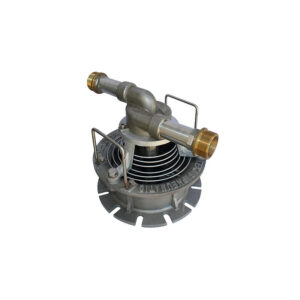
Marine blowers ventilate holds, bilges, cargo tanks and other confined spaces aboard ship where electricity and compressed air are either unavailable or not allowed. The Texas Pneumatic TXWD water driven fan takes its power from the firefighting water supply: high-efficiency nozzles convert water pressure into shaft power, and the exhaust water goes overboard or is piped back into the supply system. It is built in 12 in. and 16 in. wheels with stainless steel blades, a galvanized or powder-coated steel housing, and a brass or stainless turbine and nozzle assembly, in fixed or mobile mounting configurations. With no electrical components there is nothing to spark. For air-driven ventilation, compare jet fans, venturi air movers and tornado blowers. Ships from Denver.
Showing the single result
Showing the single result
Water Instead of Air or Power
Firewater is already plumbed to every deck, so a water-driven fan needs no cable, no generator and no compressor hose run down a ladder. Airflow follows supply pressure, so the crew adjusts output at the hydrant. In mining, on offshore platforms, and in wet or high-humidity spaces where electric fans are a problem, that is often the only practical way to get real ventilation into the space.
Built for Salt and Wet
Stainless steel blades resist rust and stand up to harsh service. The housing and frame are galvanized or powder-coated steel, and the water turbine and nozzle system is brass or stainless so it holds efficiency under pressure in corrosive water. Mounting and support structure is steel or stainless. Fixed and portable versions are both available.
Supply or Exhaust Degassing
Set up as supply, the fan pushes fresh air into the compartment. Set up as exhaust, it draws the atmosphere out — the usual arrangement for degassing tanker cargo tanks ahead of entry or hot work. For clearing a pipe or conduit rather than a compartment, use a pipe line blower; to carry the discharge to where it needs to go, add air ducting.
Common Questions
How does a water driven fan work? Water under pressure passes through nozzles that convert its kinetic energy into rotation, spinning the fan blades. No electricity and no compressed air are involved, and the spent water is discharged overboard or returned to the supply system.
What sizes do marine duty fans come in? The TXWD is configured with a 12 in. or 16 in. fan. Pick the larger wheel for bigger compartments and longer duct runs.
Are these confined space fans and blowers safe in a flammable atmosphere? They have no electrical components, which removes the spark and ignition risk that rules out an electric fan. Follow your own entry and gas-freeing procedure on top of that.
What else ventilates a confined space? Where compressed air is available, a venturi horn or an axial fan does the same job. The Texas Pneumatic marine blower page lists this unit’s configurations, and the rest of the air movement & storage range covers coolers, misters and separators.