
Texas Pneumatic Jet Fans
Compressed-air driven vaneaxial fans in 12, 16, 20 and 24 in. Cast aluminum housing and blade, usable as a blower or an exhauster, and the 20 and 24 in bodies fit API tank flanges directly.
The short version
A jet fan is a bladed vaneaxial fan turned by compressed air rather than a motor. The four-blade design produces higher air flow at lower rpm, which is easier on the bearings, and the whole unit runs as a blower or an exhauster depending on which way you mount it. Rated 40 to 110 psi with a 3/4 in NPT inlet. Four sizes: TX-JF12 (41 lb), TX-JF16 (63 lb), TX-JF20 (96 lb) and TX-JF24 (131 lb) — the 20 and 24 in fit API tank flanges, and the matching TX-SG swing gates cover the opening when the fan comes off. See the all-brands jet fans category. For a fan with no moving parts at all, see venturi air movers.
TX-JF jet fans
One product, four blade sizes. All cast aluminum, all air driven.
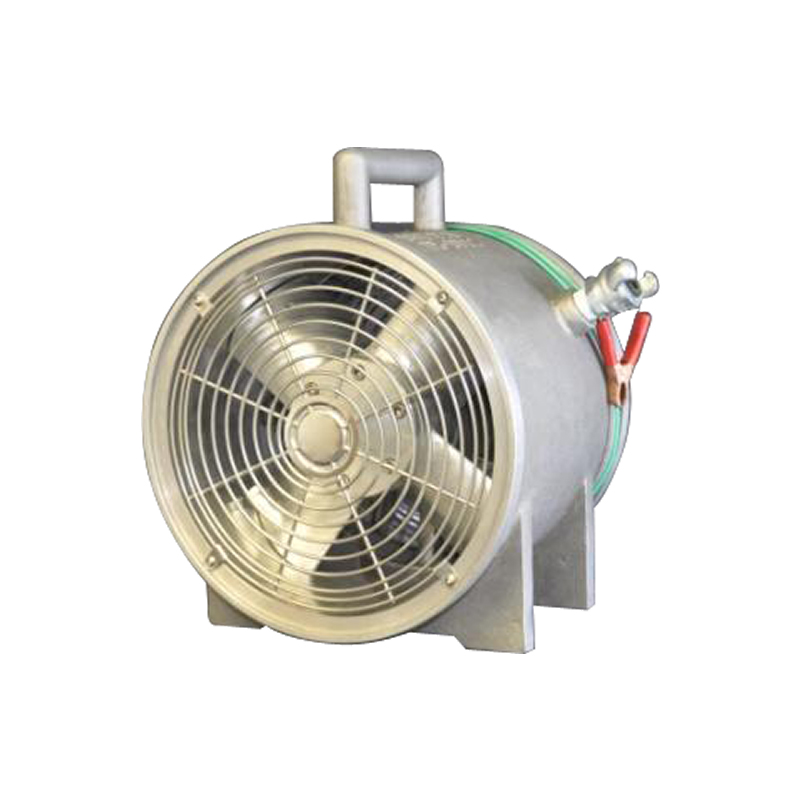
Texas Pneumatic TX-JF Jet Fan
Cast-aluminum housing and cast-aluminum four-blade rotor, 3/4 in NPT inlet, maximum 120 psi and a rated operating band of 40 to 110 psi. Minimum hose size is 3/4 in — feed it through anything smaller and it will not make its numbers.
12 in / 41 lb · 16 in / 63 lb · 20 in / 96 lb · 24 in / 131 lb
Jet fan sizes
| Model | Blade diameter | Weight | Fits API tank flange | Price |
|---|---|---|---|---|
| TP-TXJF12 | 12 in | 41 lb | — | $2,700 |
| TP-TXJF16 | 16 in | 63 lb | — | $3,150 |
| TP-TXJF20 | 20 in | 96 lb | Yes | $3,500 |
| TP-TXJF24 | 24 in | 131 lb | Yes | $6,250 |
Swipe the table sideways to see every column.
Pair it with
Jet fan questions, answered
What is a jet fan?
A vaneaxial fan — a bladed rotor inside a cylindrical housing that moves air along the axis of the tube rather than turning it through 90 degrees like a centrifugal blower. The Texas Pneumatic version is driven by compressed air instead of an electric motor, which is what makes it usable in a classified space. The four-blade design produces higher air flow at lower rpm, which increases bearing life.
Can it be used as an exhauster?
Yes. The same unit works as a blower or an exhauster — it depends which way you mount it relative to the space you are ventilating. Blowing fresh air in dilutes; drawing contaminated air out extracts. Which one is correct is a function of your entry procedure and what is in the space.
What air pressure and hose size does it need?
Rated operating pressure is 40 to 110 psi with a maximum of 120 psi. The inlet is 3/4 in NPT and the minimum hose size is 3/4 in. Running a long 1/2 in whip to a jet fan is the most common reason one underperforms.
Which sizes fit an API tank flange?
The 20 in and 24 in units are built to fit API tank flanges directly, which is why they are the standard pick for above-ground storage tank work. The matching TX-SG20 and TX-SG24 swing gates use a magnetic closure device and can be used with flanges in any orientation and multiple pressure ratings, so the opening is covered when the fan is removed. Fans and gates are sold separately.
Jet fan or venturi air mover?
The venturi air mover has no moving parts and multiplies your supply air many times over — better when there is genuinely nothing that can be allowed to move or wear, and cheaper. The jet fan has a rotor and bearings but produces directional throw and mounts to a tank flange, which is what tank and tunnel work usually needs.
What is it made of?
Cast-aluminum housing and cast-aluminum fan blade. That keeps the weight manageable at 41 lb for the 12 in unit while surviving the knocks that come with tank and tunnel work.
Is there a parts breakdown available?
Yes — Texas Pneumatic publishes schematics and replacement parts lists for the JF12 through JF24 range and the swing gates. Call 1-888-883-5144 with your model and we will get you the drawing and the part.
Ventilating a tank or a tunnel?
Tell us the flange size, the volume and the air you have available. We will tell you which fan size and whether a swing gate belongs on the order.