

Chicago Pneumatic Drainage Pumps
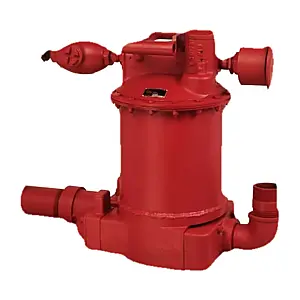
Drainage pumps sit down in the water and move it — trench and pit dewatering, tunnel sumps, storm cleanup, and washout that no surface pump will prime on. The Atlas Copco WEDA D Series handles dirty water and stormwater; the WEDA L Series is the slurry build, with the L40N configured 460V, 60 Hz on a 3 in. discharge for abrasive, solids-laden work. The AWP 2 covers lighter submersible duty, and the CP 0020 runs on compressed air from an air compressor where there is no power at the hole. Shop the Atlas Copco WEDA line, air-driven diaphragm pumps, or every model under pumps. Ships from Denver.
Showing all 2 resultsSorted by popularity
- Price range: $2,011.00 through $2,725.00 Select options This product has multiple variants. The options may be chosen on the product page
 $2,725.00 Select options This product has multiple variants. The options may be chosen on the product page
Showing all 2 resultsSorted by popularity
Drainage, Sludge, or Slurry
Atlas Copco builds the WEDA range in three families sorted by what the pump has to swallow — D for drainage, S for sludge, L for slurry — because corrosive and abrasive media chew through a general-purpose pump in a season. Clear-to-dirty trench water goes to a D-series drainage pump. Drilling fines, concrete washout, and pit muck want the L-series slurry hydraulics and their harder wet end.
What Is in the WEDA Build
The housings use an aluminum alloy picked for corrosion resistance at low weight, so one person can carry the pump to the next pit instead of rigging it. Motor cooling runs all the way around rather than depending on how deep the pump is sitting, which matters in a shallow sump that keeps drawing down. The slurry models move clean or dirty water carrying small solids without giving up efficiency. Voltage and discharge vary by configuration — the L40N ships 460V, 60 Hz with a 3 in. hose.
Electric or Air Driven
Electric submersibles move the most water per dollar wherever there is line power or a generator. Where there is none, or where an electric motor is not welcome, the air-driven submersible runs off the compressor, and a pneumatic diaphragm pump will self-prime, dead-head, and run dry without damage.
Sizing a Dewatering Pump
Two numbers decide it. Total head is the vertical lift from the water surface to the discharge plus friction losses in the hose, and it is what determines whether anything comes out the top. Solids handling is the maximum particle the pump will pass without blinding the impeller. Get the head wrong and the pump runs but does not deliver; get the solids wrong and you find a dead pump and a flooded excavation in the morning. Check both on the product page before you buy hose.
Common Questions
What is a dewatering pump? Any pump used to take standing or inflowing water out of an excavation, trench, tunnel, or pit so work can continue. On construction and mining sites that almost always means a submersible unit that lives in the water — see the rest of the pump category.
Slurry pump or drainage pump? Look at the water, not the volume. If it carries sand, fines, or washout, use the L Series slurry pump; a drainage pump moving abrasive slurry wears its impeller and loses head fast.
Do you have a pneumatic sump pump? Yes — the CP 0020 air-driven pump. Size the compressor to the pump’s rated air consumption and it will run in a pit with no power and no cord.
Do you sell hydraulic submersible pumps? Not here. This category is electric submersible and air driven. If you already run a hydraulic power pack, call with your flow and pressure and we will tell you what fits.