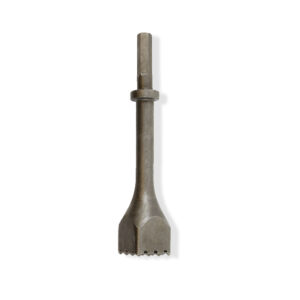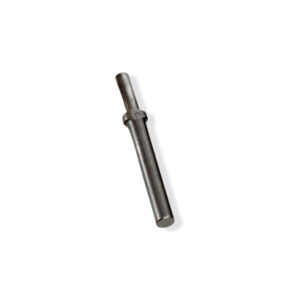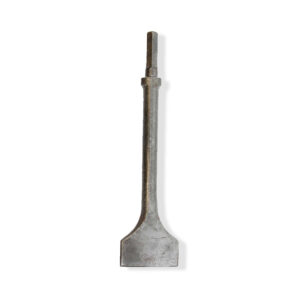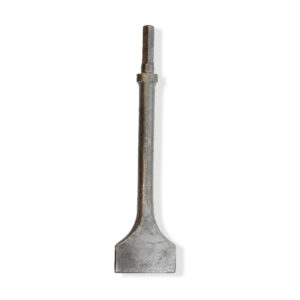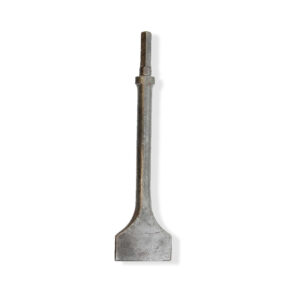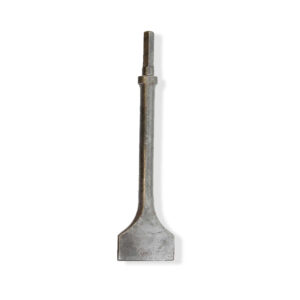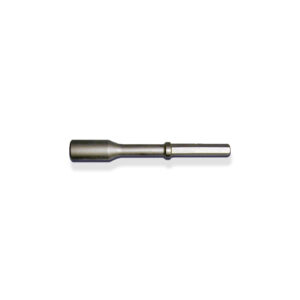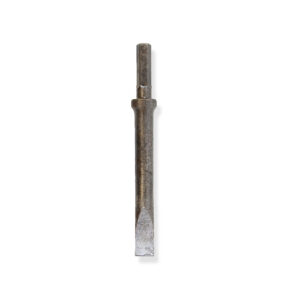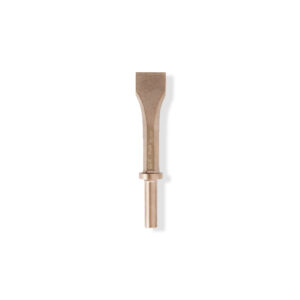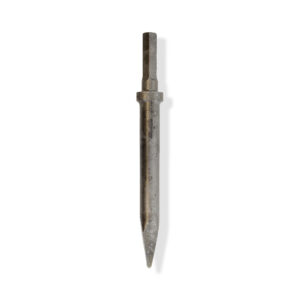
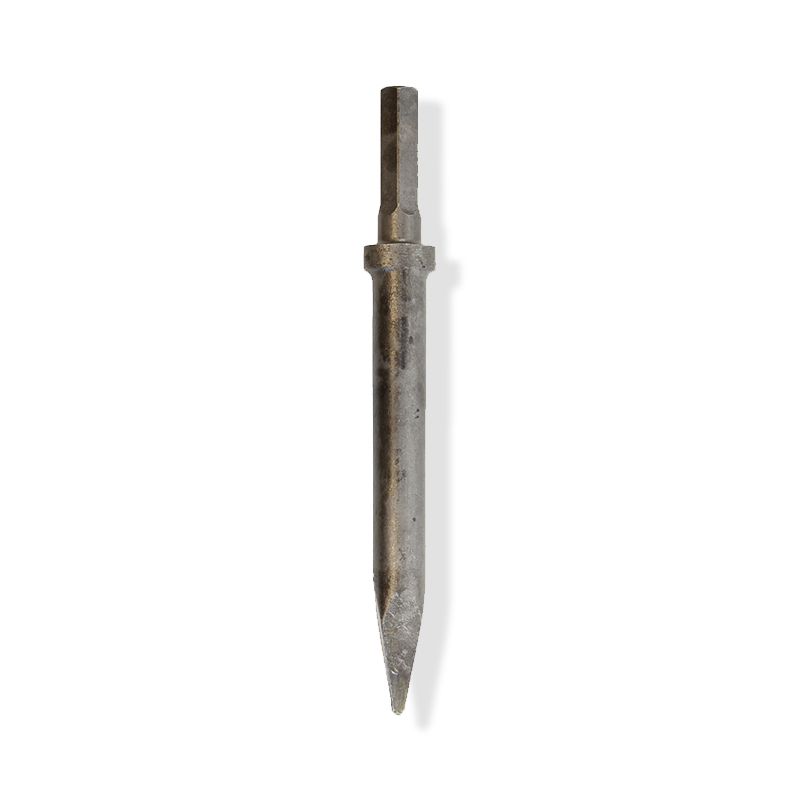
The chipping hammer moil point drives every hammer blow into a single tapered tip the fastest way to start a break in dense concrete, brick or stone before finishing with a chisel. Forged from heat-treated steel, it fits .580 hex and .680 round shank chipping hammers with oval or round collar retainers, in lengths from 9 in. stubs to 96 in. deep-reach steel.
Point first, chisel second is the standard sequence: fracture the mass with the moil, then flake it off with a narrow chisel or a wider blade from the chipping hammer chisel range. Points are consumables, so keep the hammer that drives them lubricated with pneumatic tool oil and if you are still choosing the tool itself, our chipping hammers page covers the 1- through 4-cylinder lineup.
- Tapered point concentrates impact energy to fracture dense concrete, masonry and rock
- Shank options: .580 in. hex or .680 in. round; oval or round collar
- Lengths of 9, 12, 18, 24, 36, 48, 60, 72 and 96 in.
- Heat-treated steel for hardness, impact strength and wear life
- Applications: demolition, pavement removal, trenching, stone work and anchor bolt holes
- Stocked by Crowder Supply in Denver in all the popular lengths
Moil Point FAQ
What shank do I order for my chipping hammer?
Match your hammer’s chuck and retainer: .580 in. hex or .680 in. round shank, each with an oval or round collar. All four combinations are stocked.
When do I use a moil point instead of a chisel?
Start the break with the point it concentrates the entire blow into one tapered tip to fracture dense concrete, brick or stone then switch to a chisel to flake material off. Pairing steel to the hammer is covered in the chipping hammer buyer’s guide.
What lengths are available?
Nine lengths from 9 to 96 in. 9, 12, 18, 24, 36, 48, 60, 72 and 96 in. so the same point pattern works at the face or on deep-reach work.