
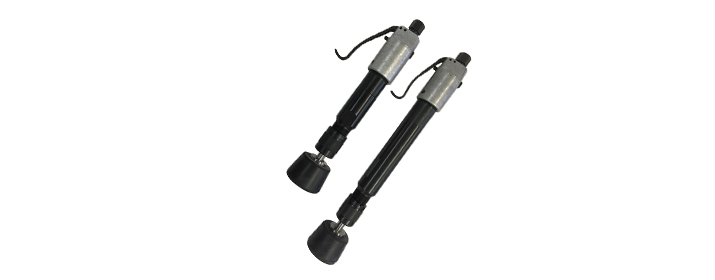
Texas Pneumatic Bench Rammers
The TX8 packs molding sand on the bench in 2-1/2 in stroke at 1,725 blows per minute or 4 in stroke at 1,240 BPM, in revolving, non-revolving and long-reach forms. 15 CFM, shipped with a rubber butt.
The short version
A bench rammer is the foundry tool for pattern and bench work: it packs molding sand tight and even around a pattern where hand ramming would be slow and inconsistent. Texas Pneumatic builds the TX8 in five configurations. Stroke first — 2-1/2 in at 1,725 BPM for finer, faster packing, or 4 in at 1,240 BPM for a heavier blow. Then piston: revolving (standard) or non-revolving, and a long-reach body for deep flasks. All run on 15 CFM and ship with a rubber butt. For packing molding sand around patterns in production rather than on the bench, see sand rammers (TX00 and TX70B). All-brands: bench and sand rammers.
TX8 bench rammer
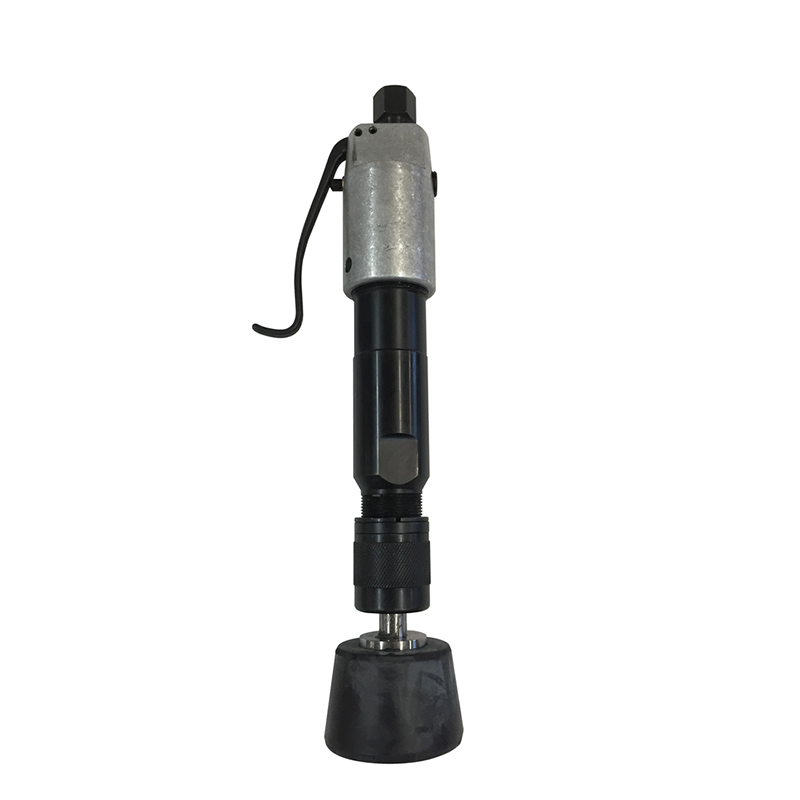
Texas Pneumatic TX8 Bench Rammer
Easy start and stop features, optional non-revolving pistons and a rubber butt as shipped. The 2-1/2 in stroke is the faster, finer tool; the 4 in stroke hits harder for deeper or coarser work. Long-reach versions extend the body for deep flasks.
2-1/2 in / 1,725 BPM or 4 in / 1,240 BPM · 15 CFM · revolving or non-revolving
TX8 configurations
| Part number | Stroke | Piston | Reach | Impact rate | Air | Price |
|---|---|---|---|---|---|---|
| TP-TX8-212 | 2-1/2 in | Revolving | Standard | 1,725 BPM | 15 CFM | $1,050 |
| TP-TX8-212NR | 2-1/2 in | Non-revolving | Standard | 1,725 BPM | 15 CFM | $1,180 |
| TP-TX8-212LR | 2-1/2 in | Revolving | Long reach | 1,725 BPM | 15 CFM | $1,315 |
| TP-TX8-4 | 4 in | Revolving | Standard | 1,240 BPM | 15 CFM | $1,300 |
| TP-TX8-4LR | 4 in | Revolving | Long reach | 1,240 BPM | 15 CFM | $1,650 |
Swipe the table sideways to see every column.
The rest of the foundry
Bench rammer questions, answered
What is a bench rammer used for?
Packing molding sand in bench and pattern work in a foundry. Consistent ramming density is what determines whether the mould holds its shape and whether the casting comes out dimensionally right, and doing it by hand across a shift is neither fast nor consistent.
Which stroke should I choose?
The 2-1/2 in stroke runs 1,725 blows per minute and gives finer, faster packing — the usual default for bench work. The 4 in stroke runs 1,240 BPM with more energy per blow, for deeper flasks and coarser sand. Air consumption is 15 CFM either way.
What is a non-revolving piston and do I need one?
On a standard rammer the piston rotates slightly with each stroke, which distributes wear evenly. A non-revolving piston holds its orientation, which matters when the butt shape has to stay aligned with the work. It is an option across the range and adds about $130 to the 2-1/2 in tool.
What is the long reach version for?
A longer body so the operator can ram the bottom of a deep flask without leaning into it. It costs $1,315 in 2-1/2 in stroke and $1,650 in 4 in stroke.
Bench rammer or sand rammer?
The TX8 bench rammer is the bench and pattern tool. The TX00 and TX70B sand rammers are lighter tools for packing molding sand around patterns, starting at $590. Many foundries run both, which is why the two pages cross-link. If you only buy one and you are doing bench work, buy the TX8.
What does it ship with?
A rubber butt as standard, with easy start and stop features built into the tool. Optional non-revolving pistons are ordered as a configuration rather than added later.
How much air does it need?
15 CFM at 90 psi across every configuration. That is small enough that a shop compressor will run two or three of them.
Equipping a foundry bench?
Tell us the flask depth and the sand you run. We will tell you which stroke and whether long reach or a non-revolving piston is worth the money for your work.