
Demolition & Digging (Page 6 of 6)
Tear out concrete, pavement, steel, and hard ground with percussion tools sized from a one-hand chipping hammer up to a 90 lb class breaker. Paving breakers and jackhammers such as the CP 1260 and the self-contained gas Cobra Combi do the heavy breaking. Chipping hammers take the surface and detail work, and rivet busters like the CP 4611 shear rivets and bolts on steel structures. In dirt, clay and trench diggers cut narrow trench, pick hammers and spike drivers cover track and light demo, and crushers and metal shears process what the breakers drop. Not sure which tool fits the job? Start with choosing a concrete breaking tool.
Showing 121–121 of 121 resultsSorted by popularity
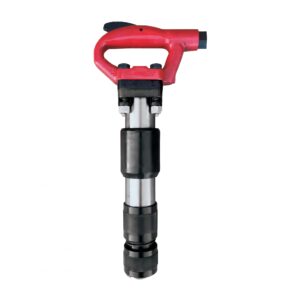 QUOTE Select options This product has multiple variants. The options may be chosen on the product page
Showing 121–121 of 121 resultsSorted by popularity
Breaking Concrete and Pavement
Breaker class sets how much slab you move in a shift; power source sets where you can work at all. Air breakers need a compressor but cost the least to run and rebuild; gas breakers carry their own engine for fence lines and trail work; hydraulic breakers run quiet and low-vibration off a power pack. Chicago Pneumatic, Atlas Copco, APT, Toku, and Texas Pneumatic all build them — compare the Chicago Pneumatic line or size one with the paving breaker buyer’s guide.
Chipping, Picking and Rivet Busting
Below the breaker class, the tools get lighter and more precise. A chipping hammer trims, scales, and chases concrete without cracking what is behind it — see the chipping hammer buyer’s guide. Rivet busters concentrate a long stroke into structural steel on bridges, hulls, and tanks; the rivet buster buyer’s guide covers stroke length and shank size. Pick hammers and spike drivers sit alongside them for track work, asphalt, and frozen ground.
Digging, Crushing and Shearing
Clay and trench diggers are the same percussion platform fitted with spade steel, moving soil, clay, and root-bound ground a plate or backhoe cannot reach. On the processing side, Darda and Tehma crushers and combi shears bite through slab and rebar quietly enough for occupied buildings. Carrier breaking moves to excavator-mounted hydraulic breakers.
Tool Steel Is the Wear Item
The hammer outlives many sets of steel, so match the shank to the tool and stock spares. Breaker points and chisels take the punishment on slab work, clay spades and asphalt cutters move dirt and pavement, and chipping hammer and rivet buster chisels cover the lighter tools. Every shank size we stock is listed there. Ships from Denver.
Common Questions
What demolition tools do I actually need to break concrete? For slab and pavement, a breaker in the right weight class plus the correct point or chisel. For trimming, patching, and overhead work, a lighter chipping hammer. The concrete breaking walkthrough linked above sorts it by slab thickness, rebar, and access.
What is a demolition pick used for? A pick hammer is a light, fast percussion tool for asphalt, frozen ground, brick, tile, and cleanup where a full breaker is too much. See pick hammers, which also cover rail spike driving.
Do you carry parts for demolition equipment? Yes. Wear parts, front heads, and service items are on our parts and diagrams pages — send the model and serial number and we will pull the right exploded view.
What size air compressor runs these tools? Total the CFM of every tool you will run at once and allow margin for hose loss. Each product page lists air demand; see air compressors for the machines that feed them.