
Post Pullers
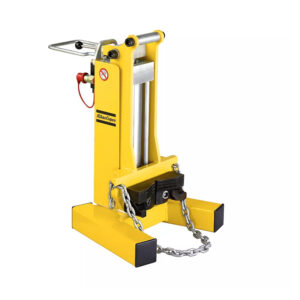
Post pullers grip a post and lift it straight out — no digging around the base, no cutting it off at grade and leaving a stub in the fence line. The 41 lb Rhino MP-3 turns a 60 in. lever into pulling force and ships complete with chain assembly and post grabber for T-posts, round posts, sign posts, and tent stakes. The 53 lb Rhino PL-3 builds the hydraulics in: a hand-pump cylinder with a 17 in. stroke and a 3/8 in. cable that breaks snapped and set-in-clay posts loose with no power pack. For crews already running a power pack, the Atlas Copco LPP 10HD pulls up to 10 tons and the CP PPU 22HD pulls 6. Shop Rhino post pullers, or to set posts instead of pulling them, post drivers. Free UPS Ground shipping on the Rhino pullers.
Showing the single result
Showing the single result
Manual, Hand-Pump, or Power-Pack Hydraulic
Three levels of force for three levels of volume. A lever puller is the lightest and simplest thing that works: throw it in the truck, pull a dozen posts, done. A self-contained hand-pump hydraulic puller keeps that portability and multiplies the force, which is what you want when a T-post snaps off at grade or a line post is set in clay that has gone concrete-hard. A power-pack puller is for fence and highway crews taking out hundreds of posts, guardrail, and crash barrier in a shift.
How Much Pulling Force
The LPP 10HD rates 10 tons and takes poles, steel beam, and round or square tube up to 7.8 in. (200 mm), including IPE, HPE, and UPE profiles as well as wooden posts and anchors. The CP PPU 22HD starts at 6 tons, with a separate hand lever adding another 4. Both use an automatic chain-tightening clamp so the jaw resets its bite as the post rises. The hand-pump PL-3 works in 17 in. bites and stands 38 in. tall.
Grabbers, Chains, and Odd Profiles
What you can pull depends on what grips it. The MP-3 ships with a chain assembly and post grabber for round, T-post, and similar profiles; optional grabbers extend the PL-3 to round posts, panel posts, and stakes. Rhino also packs the MP-3 as standard equipment in the PD-55, PD-110, and PD-140 transport kits — the teardown half of a driving crew’s loadout. See the Rhino puller accessories.
Ground Rods, Stakes, and Sign Stubs
Smaller extractions get their own tools: the tent stake and ground rod puller for rod and stake work, and the Telespar stub puller for break-away sign anchors left in the ground after a hit. Both sit with the rest of the post driving accessories.
Common Questions
How do you use a T-post puller? Set the base flat beside the post, wrap the chain or cable as low as you can reach, take up the slack, then work the lever or pump. A low wrap and a straight vertical pull keep the post from bending instead of lifting. See the Rhino line for matching grabbers.
Which puller for sign posts? For occasional removal, a lever or hand-pump unit. For a highway crew pulling square tube, U-channel, and damaged sign posts all day, a power-pack hydraulic puller is the tool — see Chicago Pneumatic post pullers.
Will these pull wooden posts? Yes. The Atlas Copco hydraulic puller lists wooden posts, steel posts, fence posts, and anchors among the profiles its integrated jaw handles; on the manual and hand-pump tools, a chain wrap low on the post does the same job.
Rent or buy a post puller? A lever puller is the least expensive tool in a fence crew’s kit and lives on the truck between jobs, so crews pulling posts more than occasionally usually buy. Rental makes sense for a one-time teardown, or when the job needs a hydraulic puller and a hydraulic power unit you do not own.