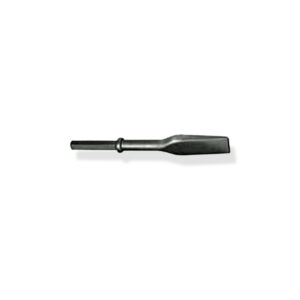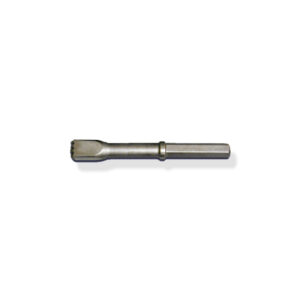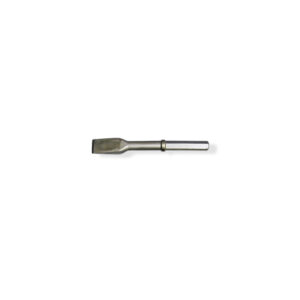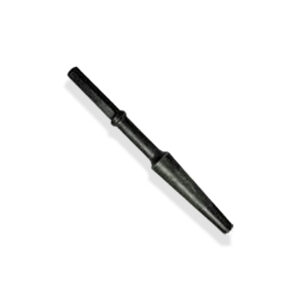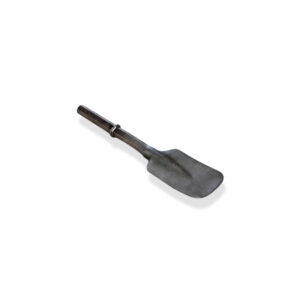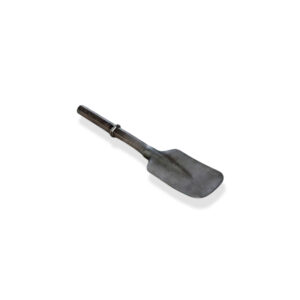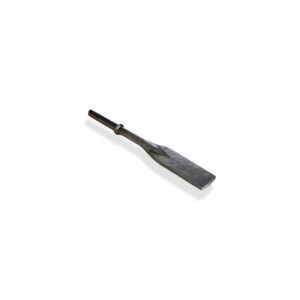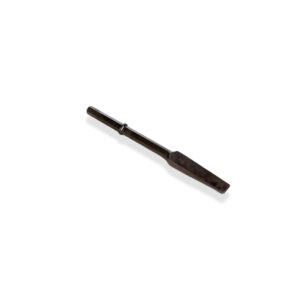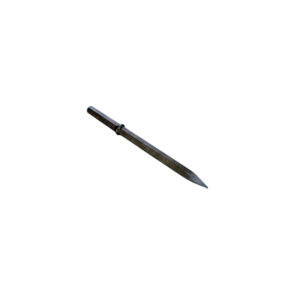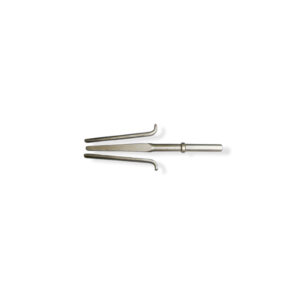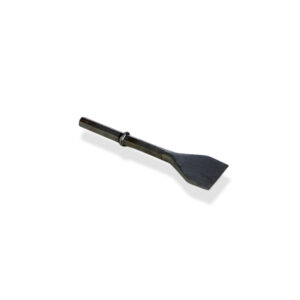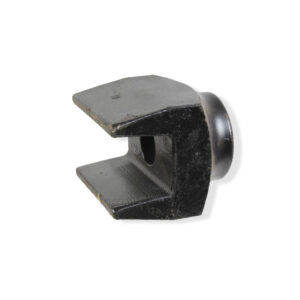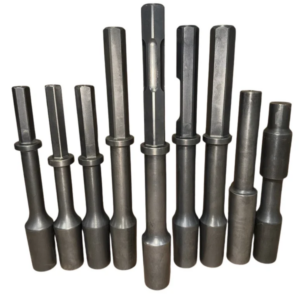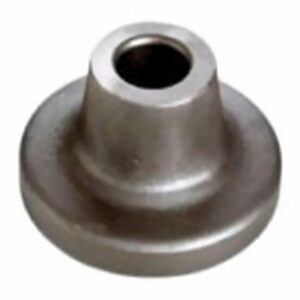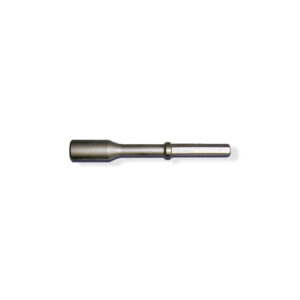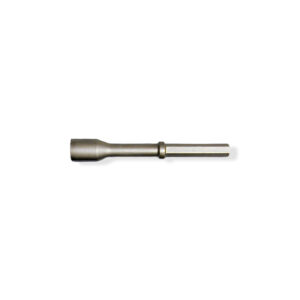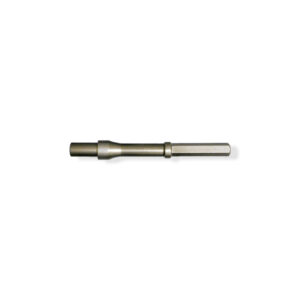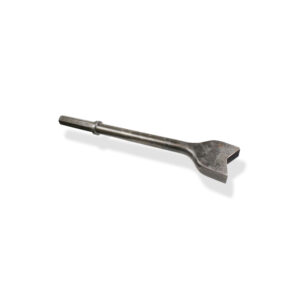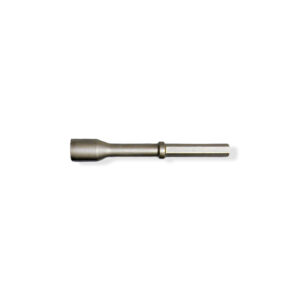
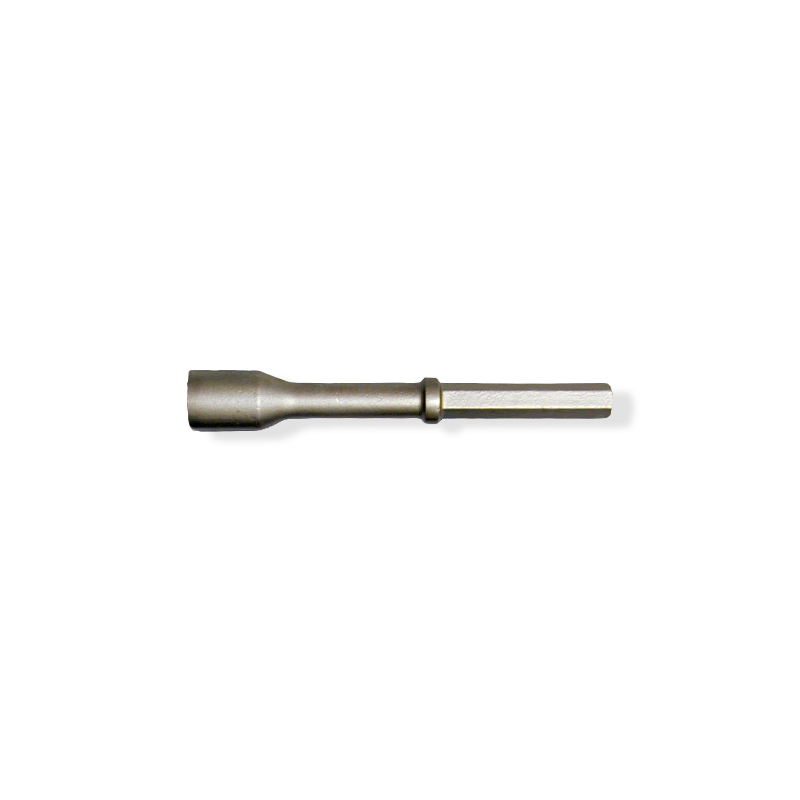
The paving breaker railroad spike driver turns a paving breaker into a spike-setting machine: a concave driving head seats over the spike head and directs every blow straight down, setting spikes in wooden or composite ties without bounce or misalignment. Hex shank options of 7/8 x 3-1/4, 1 x 4-1/4, 1-1/8 x 6 and 1-1/4 x 6 in. cover the common breaker chucks, and a Portaco-pattern 1 x 4-1/4 in. version is also stocked.
Track crews who may ask for it as a railroad spike chisel use these drivers for new spike installation, respiking during tie replacement, and rail upkeep in industrial plants, mines and ports, where consistent seating keeps rails gauged. Match the shank to your breaker’s chuck the paving breaker buyer’s guide maps chuck sizes to weight class and see our other paving breaker driving tools for ground rod and pin driving on the same shanks.
- Concave driving head seats over the spike and directs impact squarely, reducing bounce
- Hex shanks: 7/8 x 3-1/4, 1 x 4-1/4, 1-1/8 x 6 and 1-1/4 x 6 in.; Portaco version in 1 x 4-1/4 in.
- Drives railroad spikes into wooden and composite ties
- Heat-treated steel construction stands up to repeated high-impact spike driving
- Applications: track installation, respiking and maintenance, industrial and mining rail systems, temporary rail setups
- Stocked by Crowder Supply in Denver in all four hex shank sizes
Railroad Spike Driver FAQ
Will it fit my paving breaker?
Match the shank to your breakers chuck: 7/8 x 3-1/4, 1 x 4-1/4, 1-1/8 x 6 and 1-1/4 x 6 in. hex shanks are stocked, plus a Portaco-pattern 1 x 4-1/4 in. version.
Is a spike driver the same as a railroad spike chisel?
Track crews use both names for the same tool a driving steel whose concave head seats over the spike head and directs every blow straight down, without bounce or misalignment.
Does it work on composite ties?
Yes it drives railroad spikes into both wooden and composite ties, on new installation, respiking during tie replacement and rail upkeep.